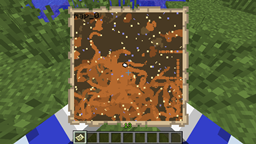
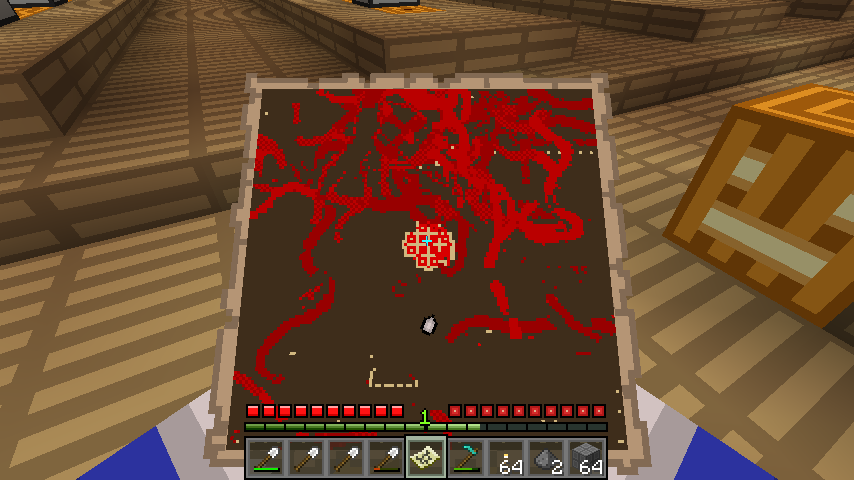
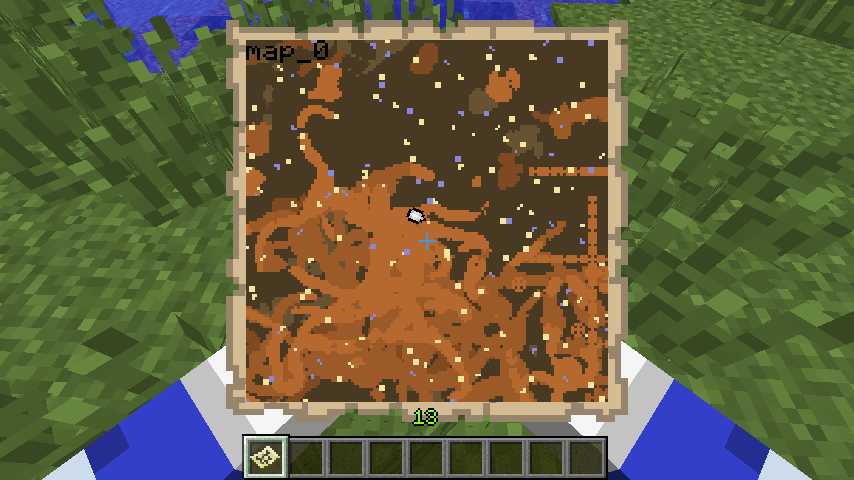
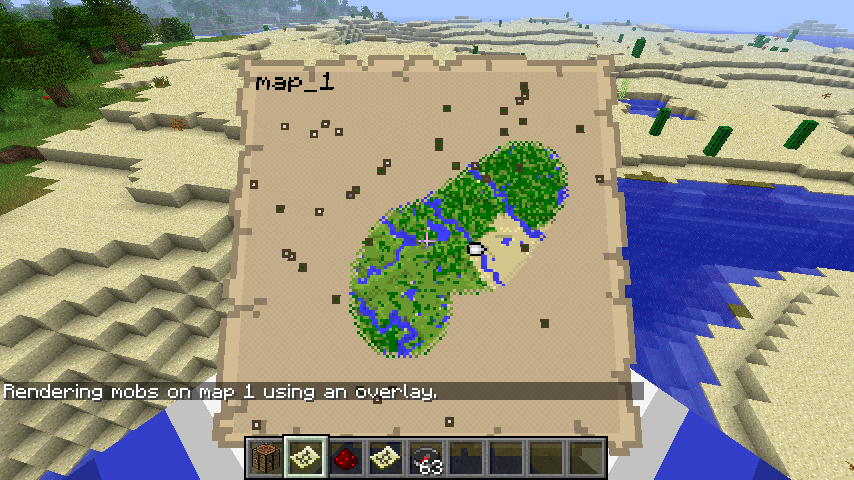
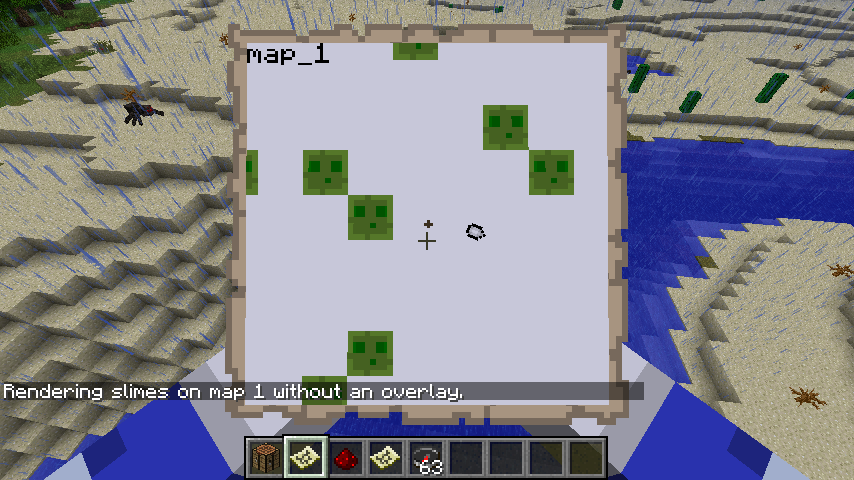
Flynt is a collection of information displays that output to a map the player is carrying. Information displays are tied to a specific map, display in item frames, and can be viewed by multiple players. (Just like regular maps.)
The following map utilities are currently supported:
Any map can have utilities added to it. Some utilities support overlay mode, so the original minecraft map shows underneath. Utilities can be stacked; you can view slime chunks and nearby mobs simultaneously if it strikes your fancy. (remember to overlay stacked maps.)
Usage:
Quote:/map slimes [overlay]
/map mobs [overlay]
/map ores <list of ores to show> - valid ores are "gold", "redstone", "diamond", "lapis", "iron", "emerald", and "coal". Defaults to "all". If you pass in "none", it will only render caves.
/map height
/map biomes
/map hostiles
/map tracks [overlay]
/map reset - removes all utilities on the map
/map setscale <scale> - sets the scale value for this map. Valid scales are 0-4, with 0 being the most "zoomed in"
/map setcenter - centers the map at your current coordinates. Resets the world ID if the map was created in a different world.
Note that maps which read the game world implement the same rate limiting (radius around the player) as vanilla maps. This is by design; it prevents the server from generating a large number of chunks while the map is updating.
In Turbo mode, the entire map is sent to connected players every second. This allows the map to be more readable when the player is moving around quickly, but also chews up quite a bit more bandwidth. This can be controlled with the utilimapper.turbo permission as needed.
Quote:/turbomaps <0|1> - 1 to enable, 0 to disable. Only affects the player that runs the command.
Permissions
Flynt uses standard Bukkit permissions and should not require SuperPerms. If no permissions management plugin is installed, only ops can use commands, including all utilities. See here for a full list of permission nodes.
Known Bugs:
Planned Features / Changes
Notes:
The mob radar is drawn at the player's center, and ignores the location that the map was created at. This is by design, as mobs tend to become non-interesting and/or disappear when the player moves away.