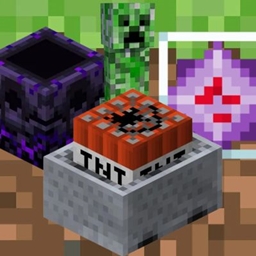
Complete, per-source control over every explosion type in Minecraft, for Paper 1.21.11 / Java 21.
Author: zSouul
ExplosionControl gives server administrators independent control over 15 explosion
categories, each with the same five options in config.yml:
| Option | Type | Effect |
|---|---|---|
enabled |
true/false |
Master on/off switch — prevents the explosion as early as possible. |
damage-multiplier |
≥ 0.0 |
Scales the damage dealt to any single living entity (1.0 = vanilla, 0.0 = no damage). Applied to raw damage before armor, so armor/resistance/absorption still reduce it normally. |
radius-multiplier |
≥ 0.0 |
Scales the blast radius/power (1.0 = vanilla). |
knockback-multiplier |
≥ 0.0 |
Scales the knockback velocity applied to caught entities. |
block-damage |
true/false |
Whether the explosion is allowed to destroy/drop blocks. |
Categories: tnt, tnt-minecart, creeper, charged-creeper, wither-spawn,
wither-skull, ghast-fireball, fireball, blaze-fireball, dragon-fireball,
end-crystal, respawn-anchor, bed, wind-charge, and a catch-all other.
Reload changes at any time with:
/explosioncontrol reload
which requires the explosioncontrol.reload permission (default: op).
Every explosion source in the game is hooked at the earliest point the Paper API exposes for
that source, so enabled: false prevents as much of the explosion (damage, knockback, and
block damage) as technically possible — not just the block destruction.
| Category | Primary hook(s) | Notes |
|---|---|---|
tnt |
ExplosionPrimeEvent + EntityExplodeEvent |
Standard entity-explosion pipeline. |
tnt-minecart |
ExplosionPrimeEvent + EntityExplodeEvent |
Same pipeline; entity type ExplosiveMinecart. |
creeper |
ExplosionPrimeEvent + EntityExplodeEvent |
Creeper#isPowered() == false. |
charged-creeper |
ExplosionPrimeEvent + EntityExplodeEvent |
Creeper#isPowered() == true. radius-multiplier is applied on top of vanilla's own charged-creeper radius doubling. |
wither-spawn |
ExplosionPrimeEvent + EntityExplodeEvent |
The single explosion fired the moment a Wither finishes spawning; source entity is the Wither itself. |
wither-skull |
ExplosionPrimeEvent + EntityExplodeEvent |
Covers both the regular and blue/"charged" skull variants. |
ghast-fireball |
ExplosionPrimeEvent + EntityExplodeEvent |
LargeFireball whose getShooter() is a Ghast. |
fireball |
ExplosionPrimeEvent + EntityExplodeEvent |
Any other LargeFireball (e.g. dispenser-fired). |
blaze-fireball |
ExplosionPrimeEvent + EntityExplodeEvent |
See limitation below — inert on unmodified vanilla. |
dragon-fireball |
EnderDragonFireballHitEvent + EntityDamageEvent(DRAGON_BREATH) |
See limitation below — different mechanic entirely. |
end-crystal |
ExplosionPrimeEvent + EntityExplodeEvent |
Entity type EnderCrystal. |
wind-charge |
ExplosionPrimeEvent + EntityExplodeEvent |
Covers both thrown/dispensed WindCharge and Breeze-fired BreezeWindCharge (shared AbstractWindCharge supertype). |
respawn-anchor |
PlayerInteractEvent (pre-explosion) + BlockExplodeEvent |
See limitation below. |
bed |
PlayerBedFailEnterEvent (pre-explosion) + BlockExplodeEvent |
Fully preventable — see below. |
other |
Every hook above, as a fallback branch | Catches any future/unrecognised explosion source so nothing is ever left unconfigurable. |
damage-multiplier is enforced for every category above through a single shared
EntityDamageEvent listener (for ENTITY_EXPLOSION/BLOCK_EXPLOSION causes, plus
DRAGON_BREATH for the Dragon Fireball special case), which resolves the responsible
category via DamageSource#getCausingEntity() for entity sources, falls back to
ExplosionOriginRegistry (a short-lived cache populated when the explosion was primed, for
the rare case the source entity is already gone), and finally to reading the block still
present at DamageSource#getDamageLocation() for block sources (Bed/Respawn Anchor).
knockback-multiplier is enforced through EntityKnockbackEvent
(KnockbackCause.EXPLOSION). Since that event does not expose which explosion caused it, the
category resolved a moment earlier by the damage listener (for the same victim) is reused —
see PendingKnockbackCache for the full explanation of why and how this is safe.
Bed and Respawn Anchor explosions apply entity damage/knockback before Bukkit fires
BlockExplodeEvent. Unlike entity-sourced explosions (which fire the cancellable
ExplosionPrimeEvent before anything happens), Bukkit only exposes BlockExplodeEvent
for these two sources — after damage and knockback have already been applied. Cancelling
BlockExplodeEvent alone would therefore only stop block destruction, not enabled: false
as a whole.
PlayerBedFailEnterEvent (willExplode() == true), which fires before vanilla starts
the explosion. Cancelling it fully prevents the explosion (damage, knockback, and block
damage). This is a complete fix, not a workaround.PlayerInteractEvent (a right-click
on a charged anchor outside the Nether, without glowstone in hand) and cancelling it,
which replicates vanilla's own trigger condition. This covers the normal player-driven
case completely, but — unlike Bed — cannot guarantee prevention if some other means
forces the anchor to explode outside that interaction. BlockExplodeListener still runs
as a second line of defence for block damage in that edge case.EntityKnockbackEvent does not expose which entity or block caused the knockback —
only a coarse KnockbackCause.EXPLOSION value, with no accessor for the exploding
entity/block. Addressed by correlating it with the EntityDamageEvent fired for the same
victim immediately beforehand (vanilla always damages-then-knocks-back each affected entity
before moving to the next one), via a small short-lived cache keyed by entity UUID
(PendingKnockbackCache). If no matching entry is found (e.g. another plugin cancelled the
damage event first), vanilla knockback is left untouched rather than guessed at.
Blaze Fireball (blaze-fireball) does not actually explode in vanilla Minecraft. A
Blaze's small fireball only ignites its target; there is no explosion for the Paper API to
expose here at all. This section is still fully wired up (identical hooks to every other
entity-sourced explosion) so that if a data pack, mod, or future Minecraft version ever
makes small fireballs explosive, it is instantly configurable with no further plugin
changes — it simply has nothing to do on an unmodified vanilla/Paper server today.
Dragon Fireball (dragon-fireball) is not a block-destroying explosion at all. On
impact it spawns a lingering AreaEffectCloud ("dragon's breath") that deals
DRAGON_BREATH-cause damage over time; it never fires ExplosionPrimeEvent or
EntityExplodeEvent, and has no knockback component. Addressed with a dedicated listener
using the closest honest analogues available: enabled cancels
EnderDragonFireballHitEvent outright (no cloud ever appears), damage-multiplier scales
each tick of DRAGON_BREATH damage, and radius-multiplier scales the resulting cloud's
radius. block-damage and knockback-multiplier are intentionally ignored for this
category and documented as such in config.yml, since vanilla dragon fireballs never
destroy blocks or apply knockback in the first place — there's nothing for either option
to meaningfully control.
repo.papermc.io and Maven Central are unreachable from the sandbox this project was
authored in, so a compiled jar could not be produced or linked against the genuine
paper-api artifact in that environment (see the note under Building above for exactly
how correctness was still verified without it).
| Permission | Default | Description |
|---|---|---|
explosioncontrol.reload |
op |
Allows running /explosioncontrol reload. |
| Command | Description |
|---|---|
/explosioncontrol reload |
Reloads config.yml without restarting the server. |