Two Turkish table games — Okey and Tavla — played on real tables, right there in the world.
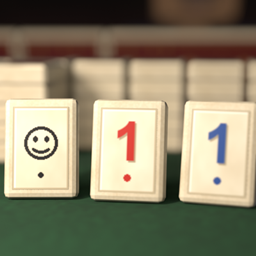
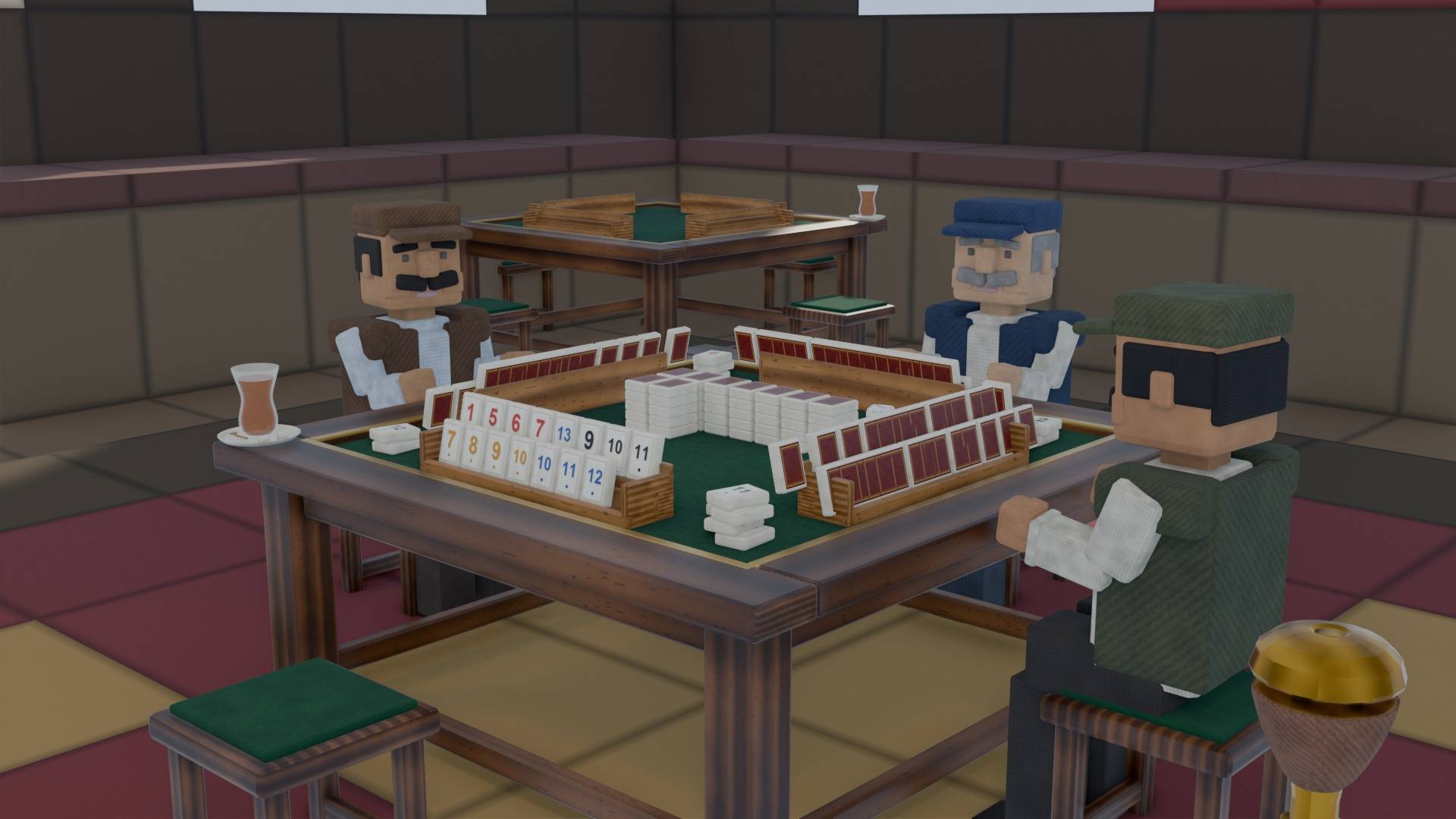
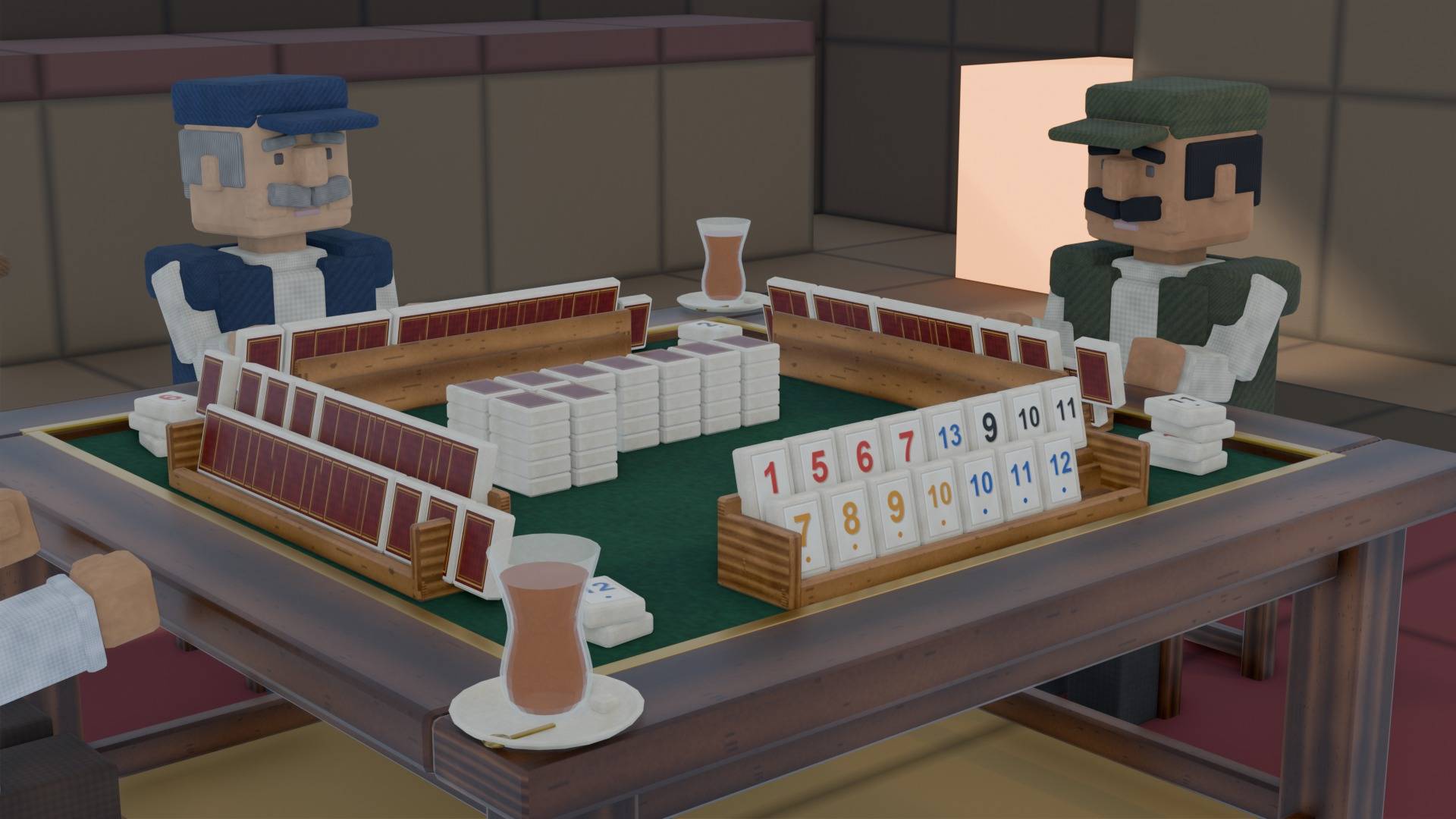
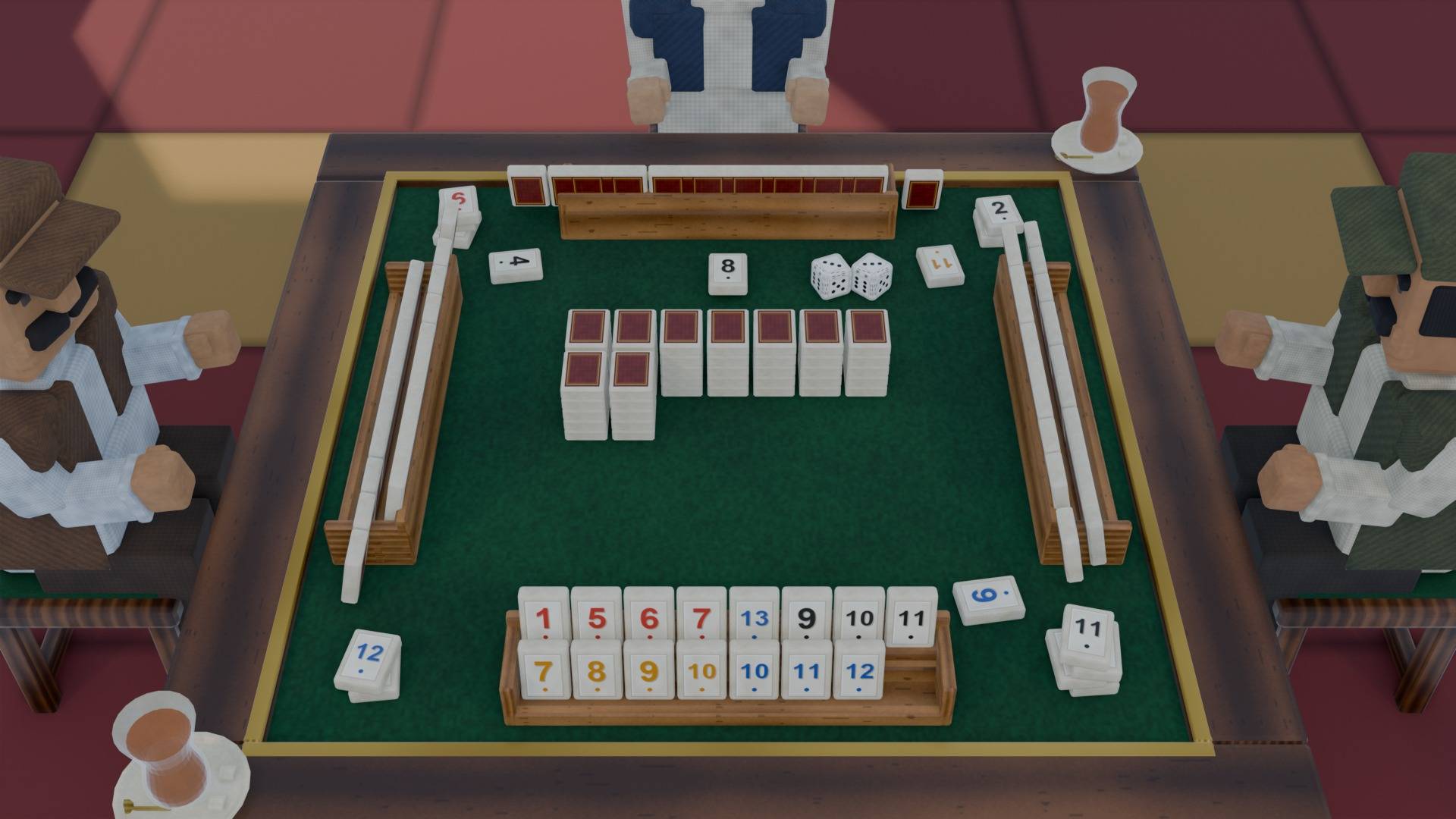
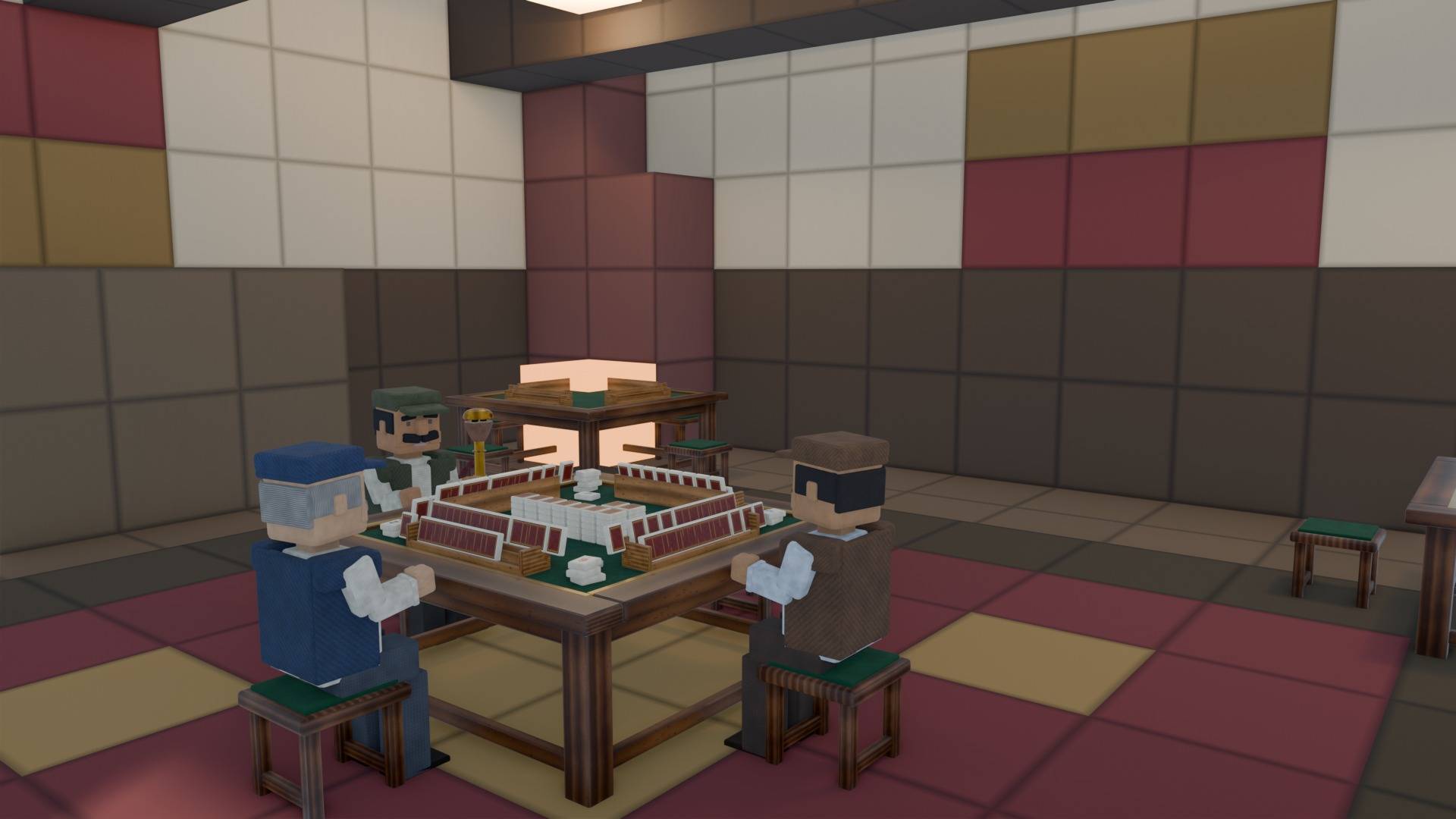
No abstract menu game. Tars Okey puts a hand-built wooden table into Minecraft: green felt, brass trim, four stools, four istaka racks and all 106 tiles. You sit down, the tiles are dealt onto your rack, and you play on the table itself — reach for a tile with your crosshair, drag it where you want it, throw it on the pile. No window required.
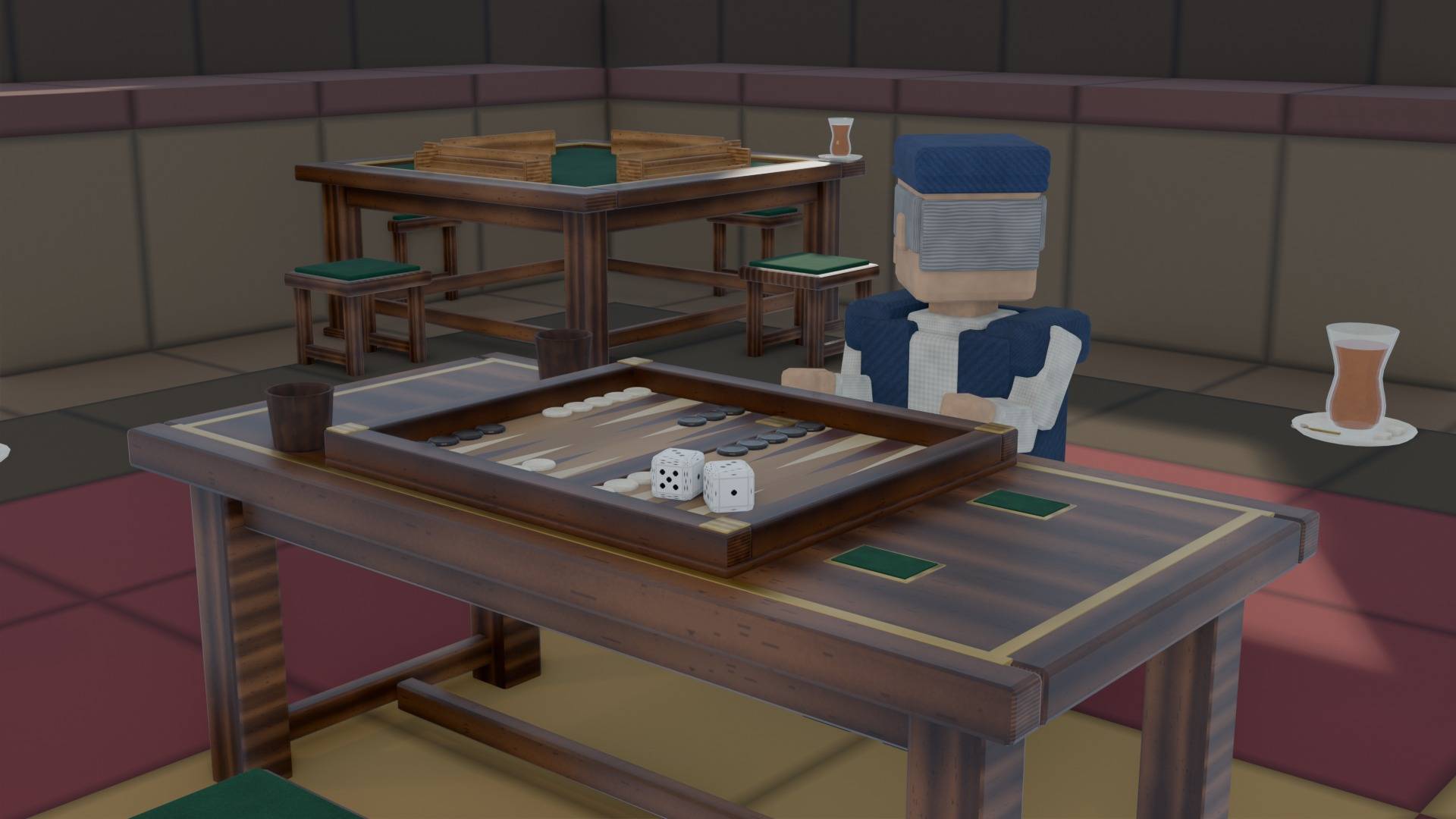
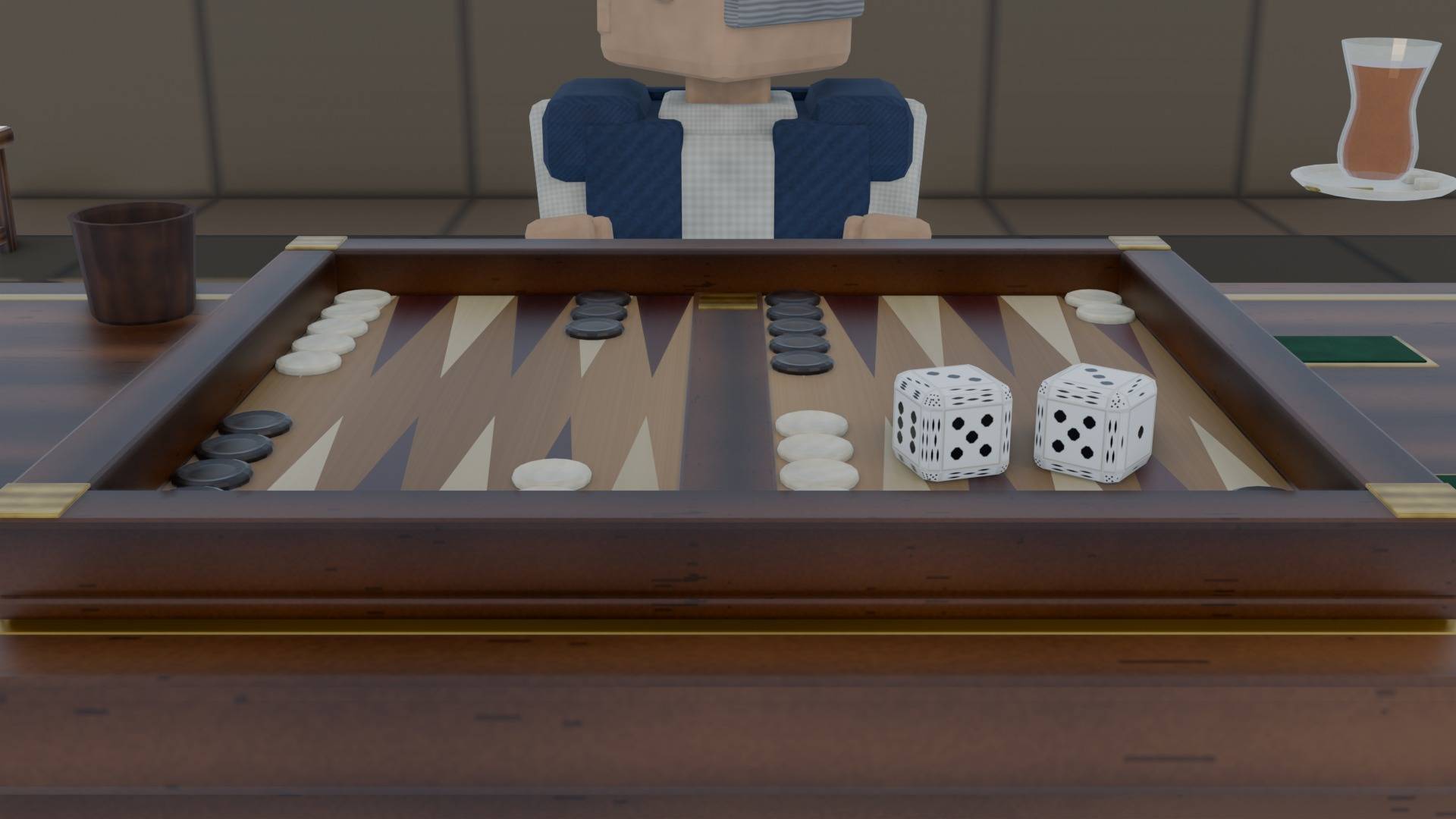
Next to it stands the Tavla table: Turkish backgammon, two seats, a real board with 30 checkers and two dice. Same idea, same hands-on table.
Everything runs off the right mouse button. What you aim at gets a golden outline, so you always know which tile you are about to touch.
| You want | You do |
|---|---|
| Draw from the talon | One click on the stacks in the middle |
| Take the open tile of the player on your left | One click on their pile |
| Move a tile | Hold, drag it to the slot you want, release |
| Discard | Hold and release at the front right of your rack — with two or three players the tile lands at the next player on its own |
| Finish the round | Hold your last tile and release it over the middle of the table — it goes face down onto the talon |
| Changed your mind | Left-click while dragging |
| Open the window (start, ready, uncles, settings, stakes, leaving) | Press O |
A turn clock sits at the top of the screen while you play: when it is your turn you see the time left in large digits with a shrinking bar that turns red in the last ten seconds and ticks softly in the last five. Everyone else sees who is on turn and how long they have.
The window is only for the table itself — starting, getting ready, adding or removing uncles, settings and stakes. It shows no tiles: the game is played on the table only. When someone wins, everyone sees the winner's rack for five seconds, laid out exactly as the winner arranged it.
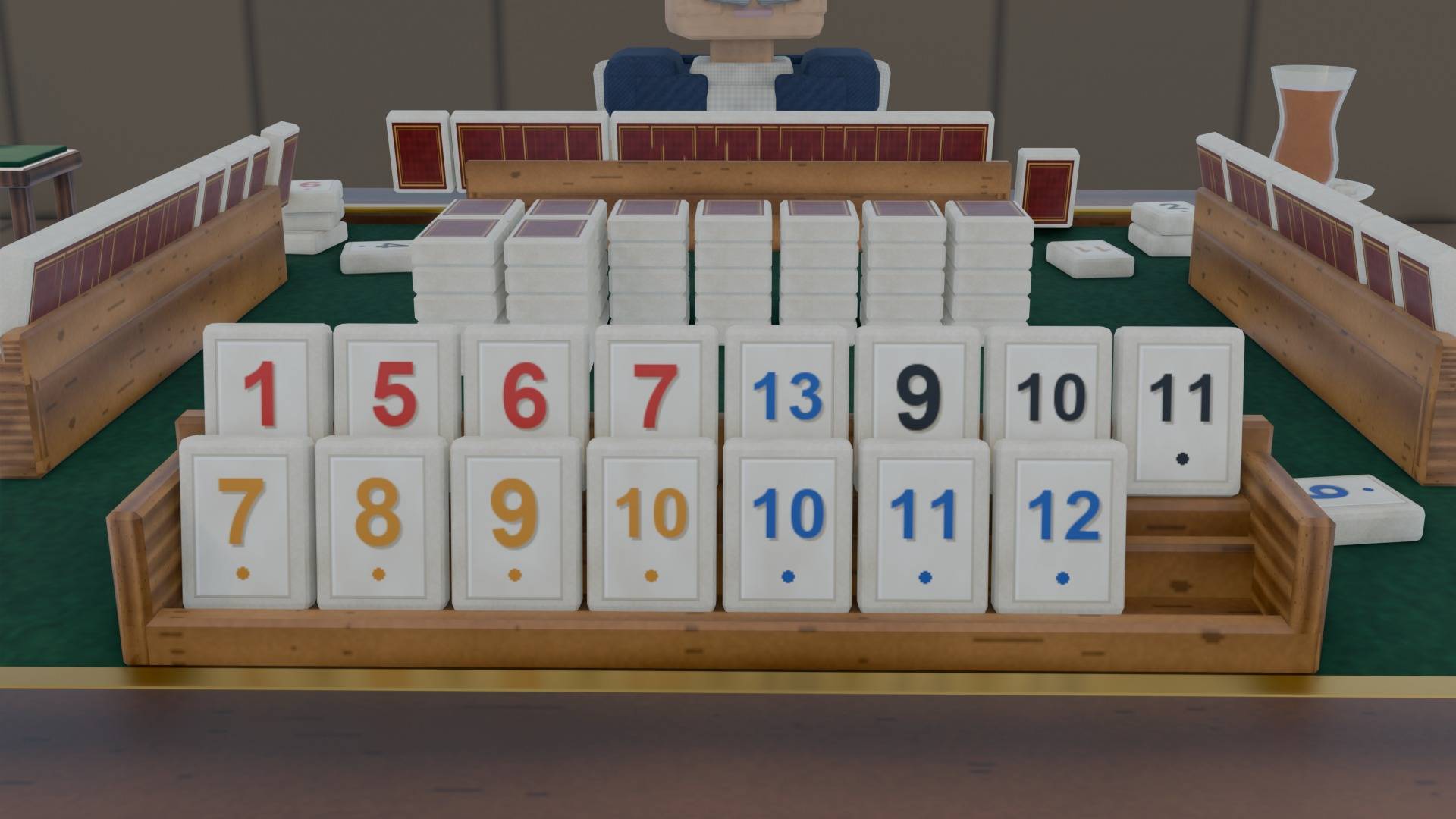
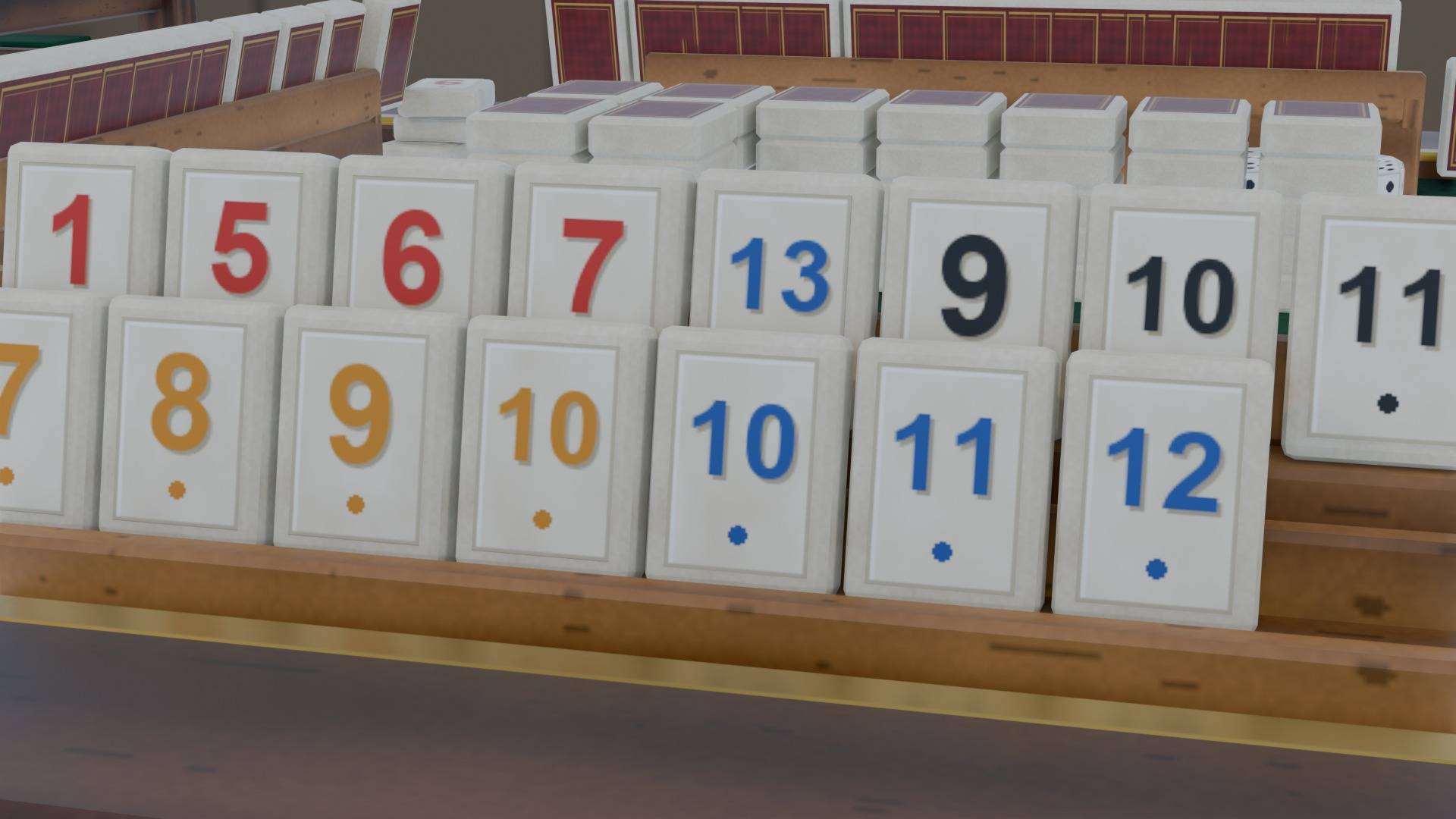
Each rack has two rows of eleven slots — 22 for at most 15 tiles. That is on purpose: only with free slots can you lay a hand out in groups with gaps between them, the way you do at a real table. The gaps stay where you put them, even after you discard. Nothing slides around behind your back.
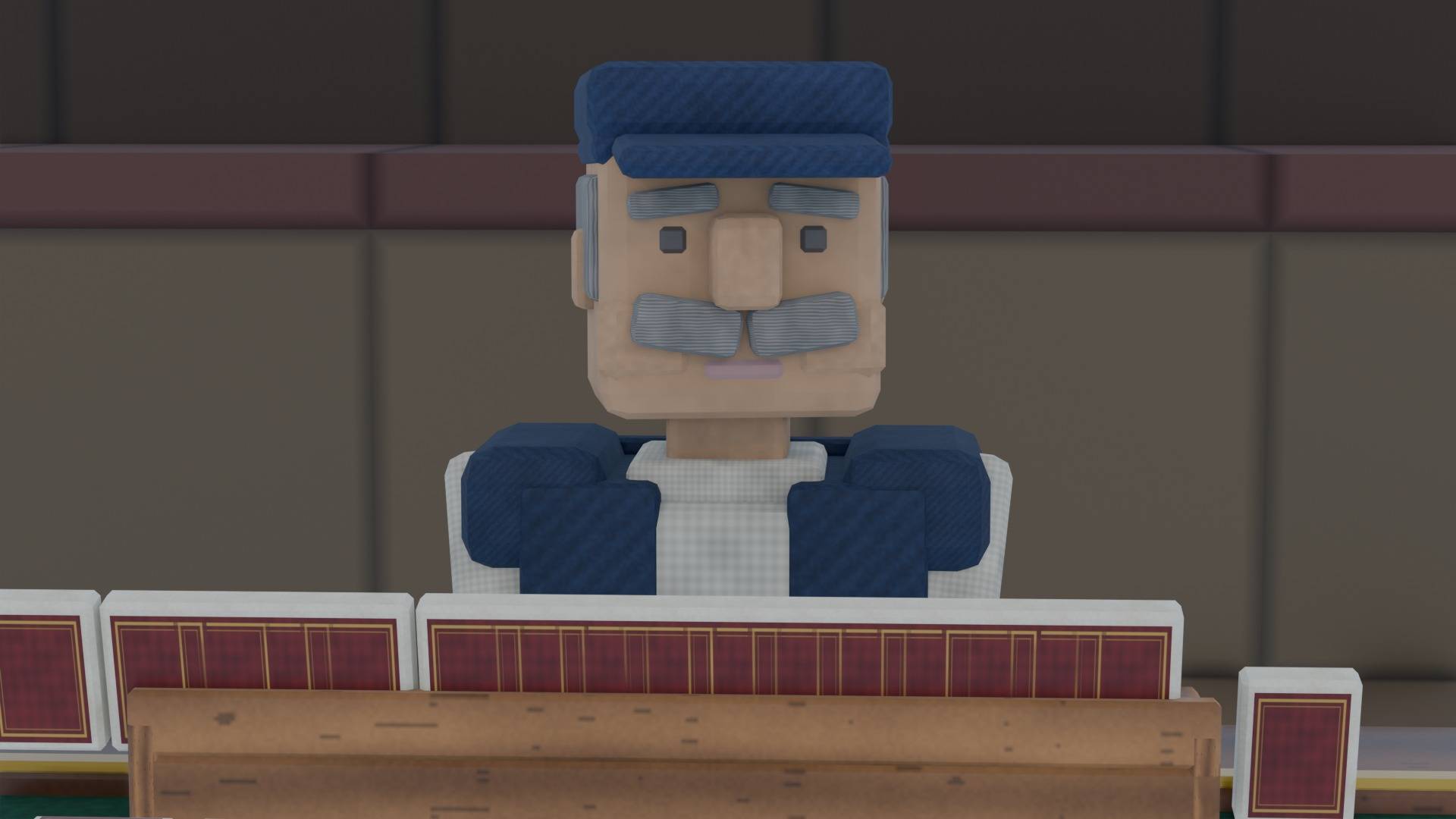
Short on players? Sit down with Mehmet, Kemal, Sabri or Orhan Amca. They are modelled and animated: they rest their forearms on the table edge, reach out when they draw, turn their heads to whoever is playing, and rock gently while they think.
Three strengths — easy-going, shrewd and coffee-house master. They see exactly what a human sees: their own hand and what lies open on the table. They do not look into the talon, and they do not look at your tiles.
In 300 test rounds against a player throwing at random, the uncles won 238 : 0.
Want to play for something? Each seat has its own stake tray. Open the stake window and you see every tray at the table, live — the other seats with their names on top, yours at the bottom. Drag in whatever you want to bet; the moment someone else adds something, it shows up for everyone. The lobby lists each player's stake next to their name too. Everyone puts in their own; nobody can reach into anyone else's.
The moment a round starts the trays lock. Every round is its own game: whoever finishes takes everything, straight into their inventory — no button to press, and anything that does not fit drops at their feet. A draw or a round won by an uncle gives every player their own stake back; so does standing up before the round starts. Then the table returns to the lobby and everyone can bet again. Stakes only count between players: if you sit alone with uncles, your tray stays open and untouched. Nothing is duplicated and nothing is lost — checked after every step in the test suite.
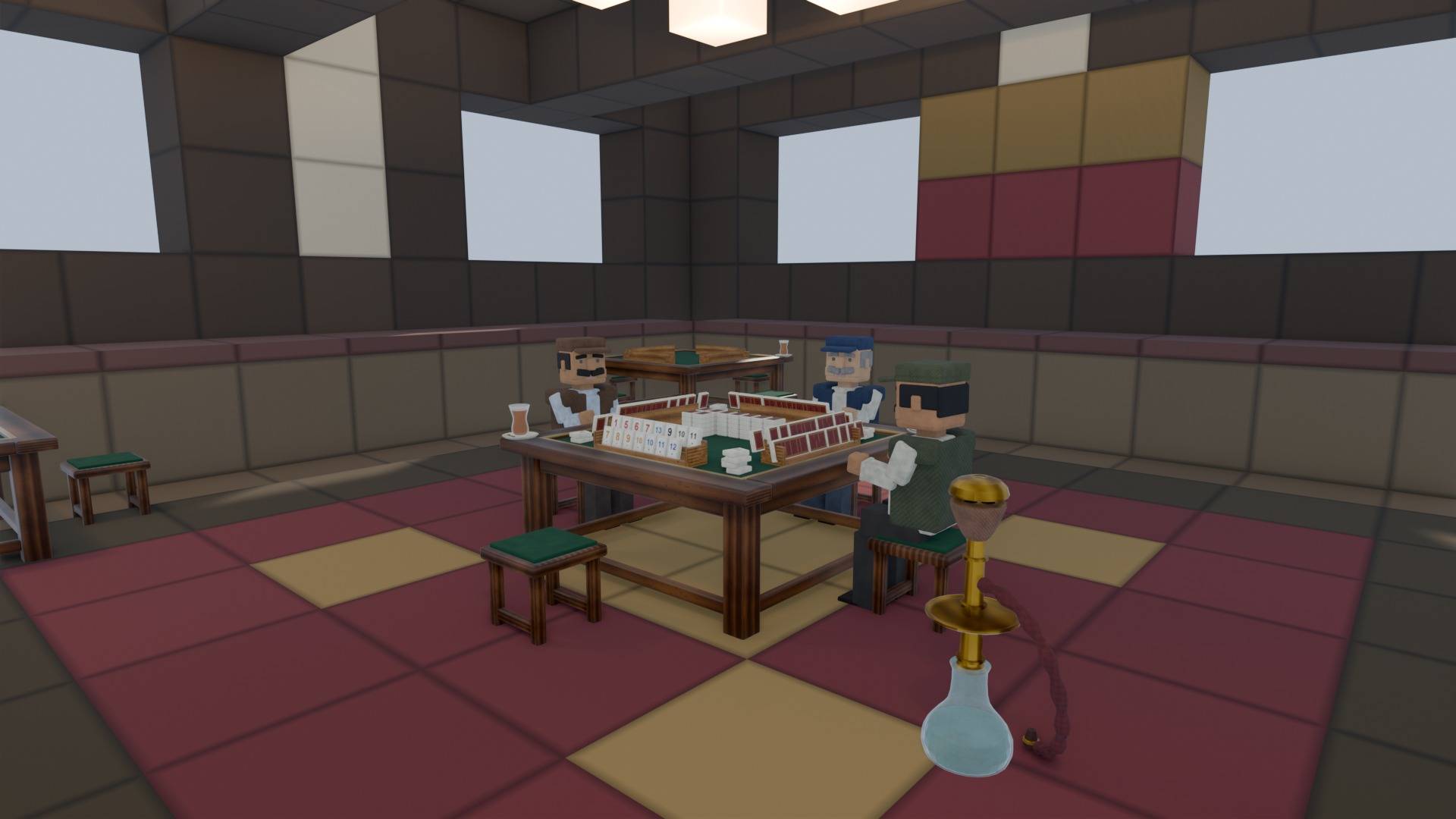
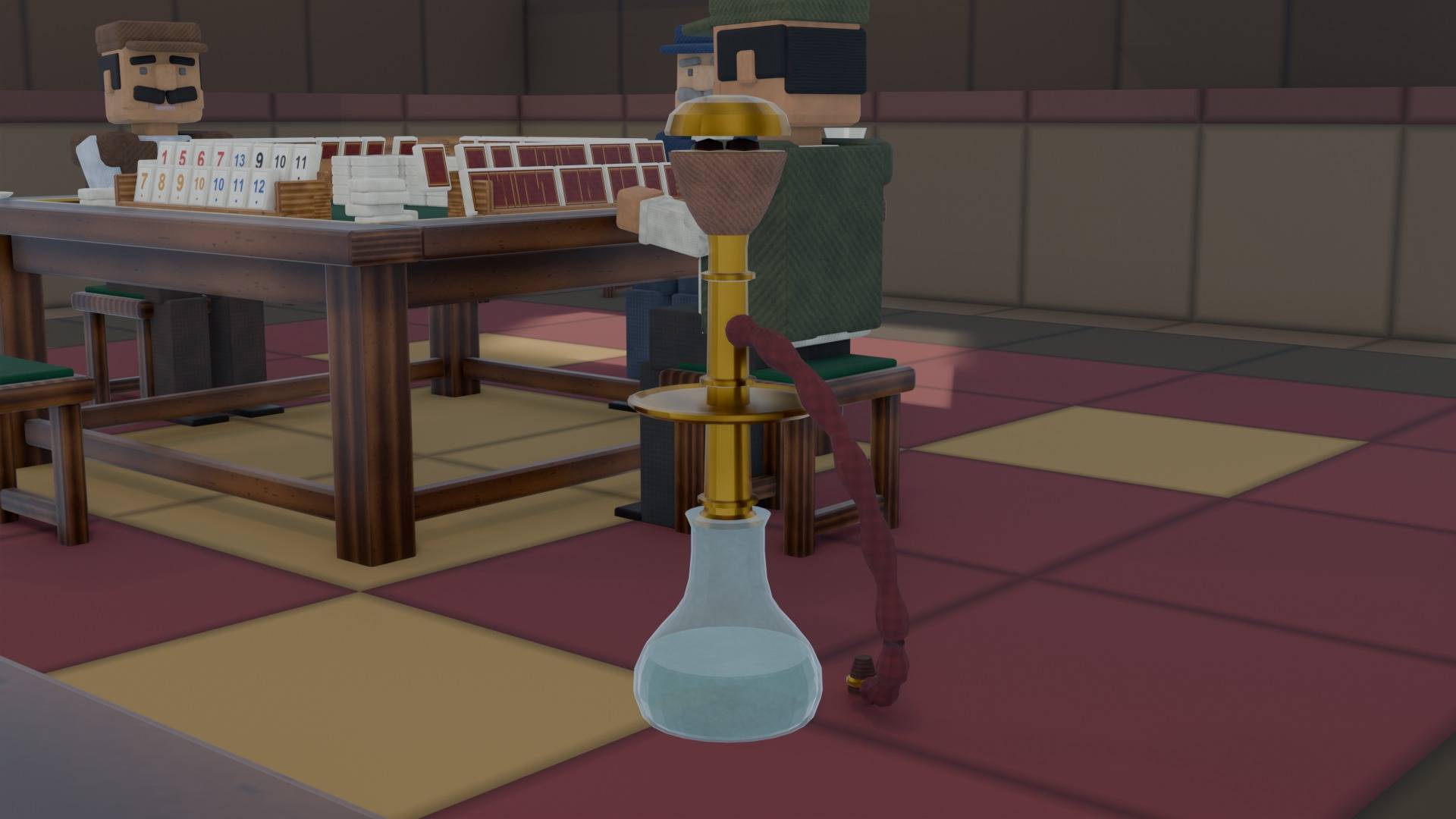
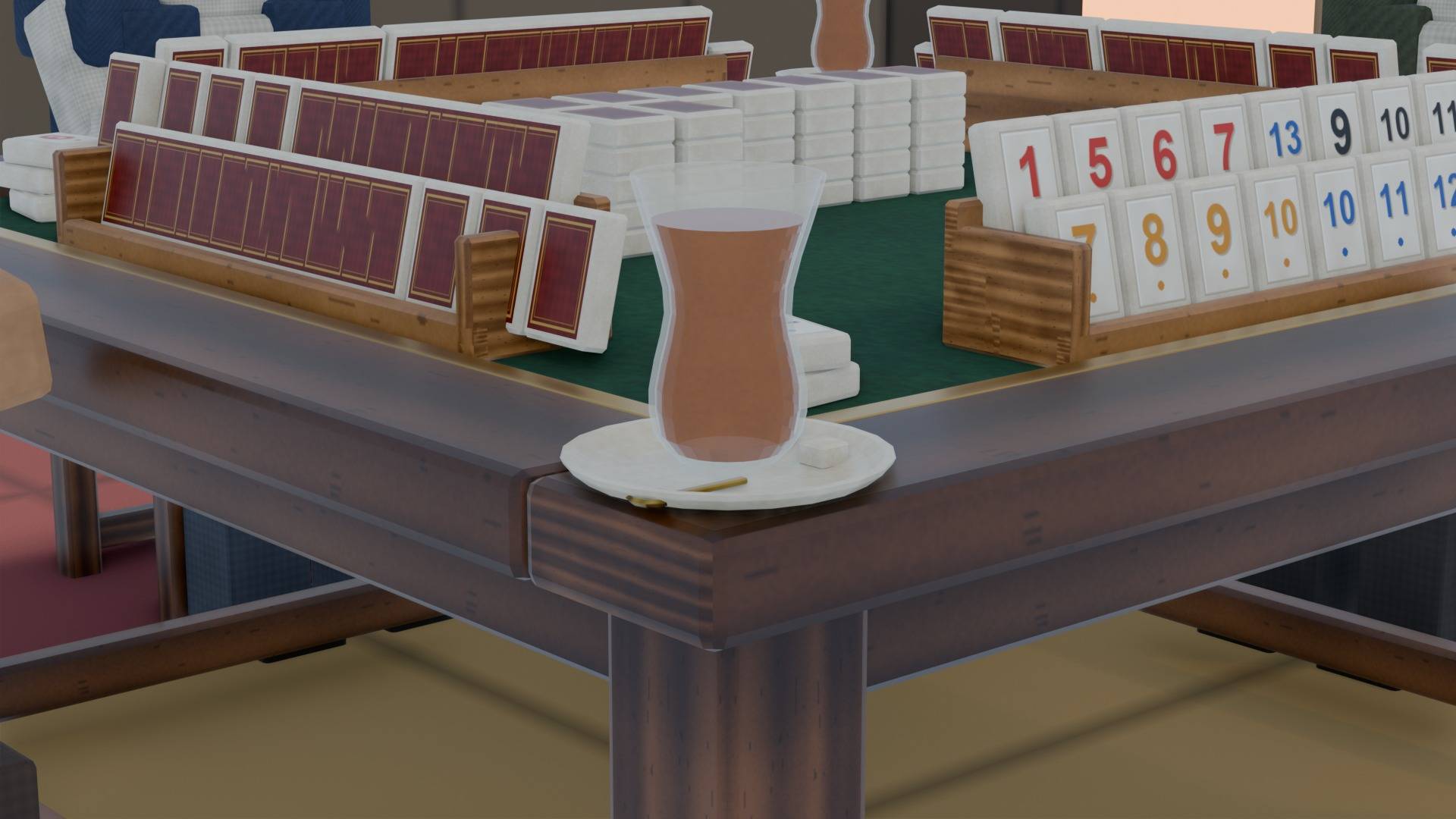
A kahvehane without a water pipe and a glass of tea is not a kahvehane.
The full classic game, not a simplified version:
Every invalid move is refused and explained, on the server, every time.
Turkish backgammon, at its own table. Craft it, place it, sit down: two stools facing each other, a wooden board with 24 points, 15 checkers per side, two dice and a leather cup at each end.
Short on players here too? The uncles sit down at the Tavla board as well, in the same three strengths. They look at the board and the dice, nothing else.
Two uncles played 240 games against each other: the coffee-house master beat the easy-going one 211 : 29.
Stakes work exactly as at the Okey table — both players pay in, the winner takes the pot.
Three builds of the same game — pick the one for your setup:
For Tavla: craft the Tavla table (planks, a bone, brown wool and two logs), place it, sit down, add an uncle or wait for a second player, and start. Roll by right-clicking the dice in front of you; press O to open the window during a game.
Language: English, German and Turkish (Türkçe), fully translated. Model, textures, sounds and rules built from scratch for this mod.