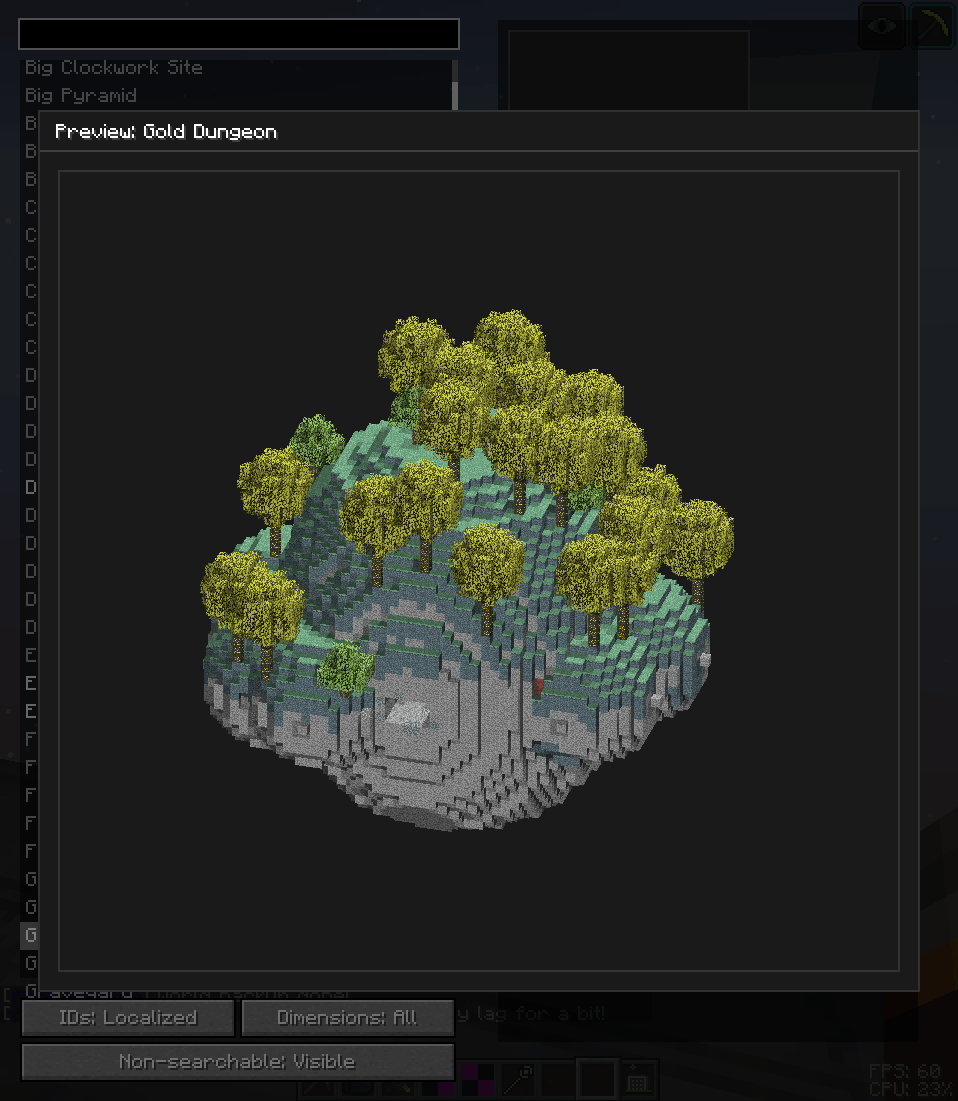
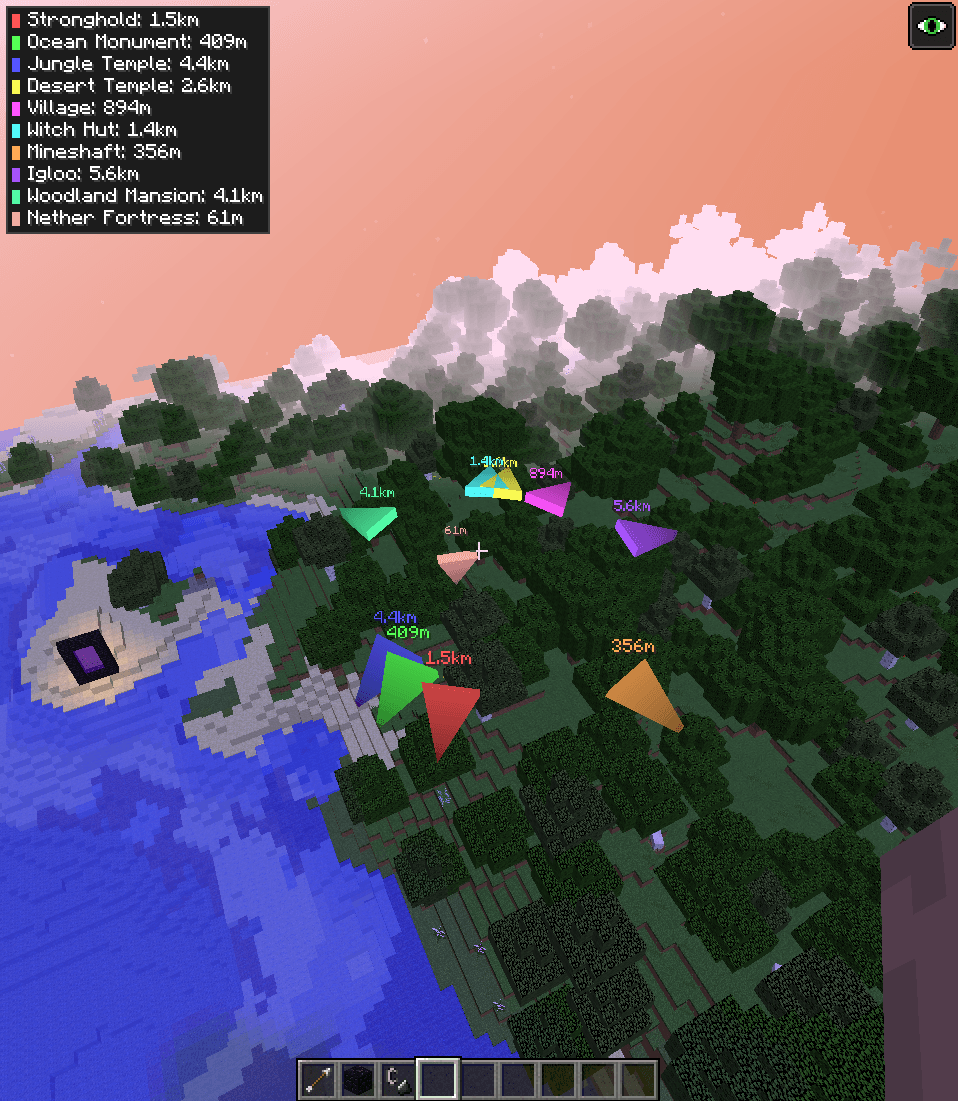
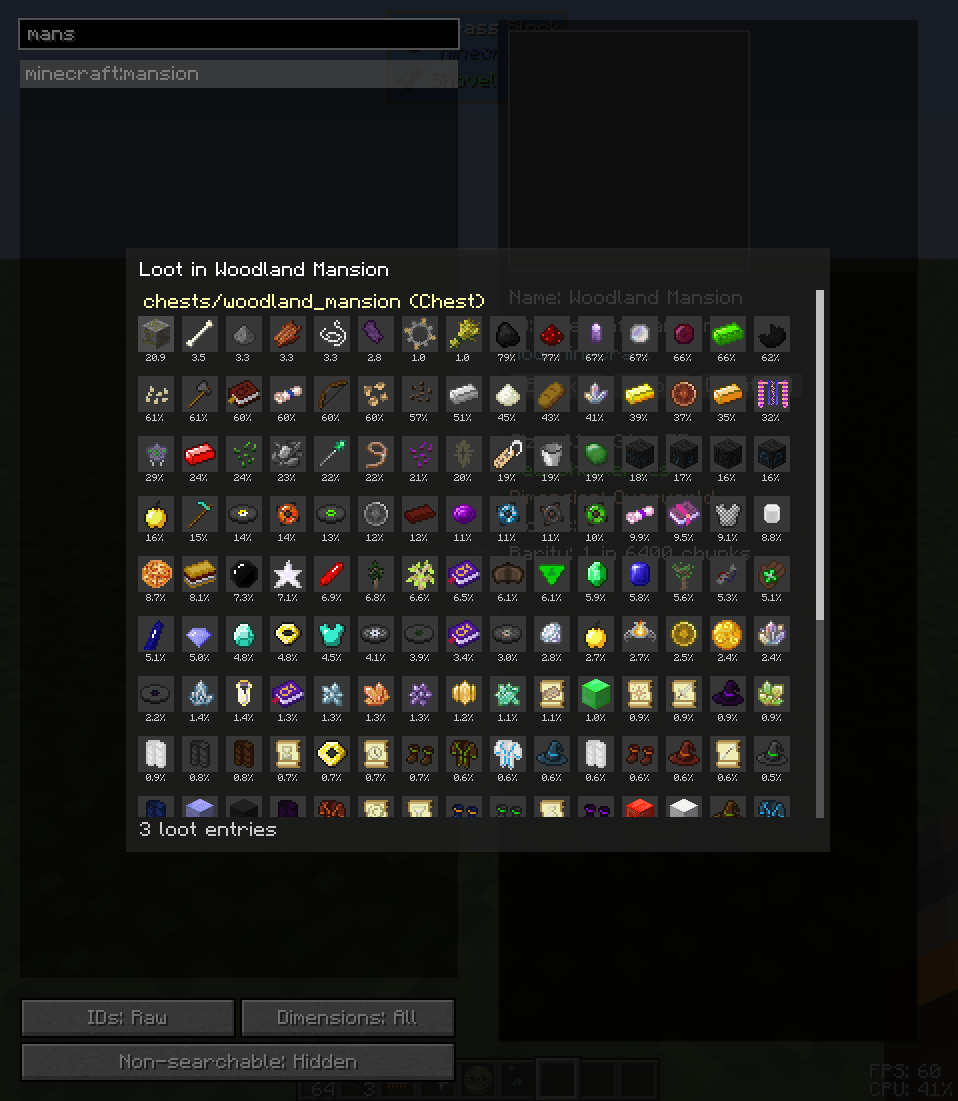
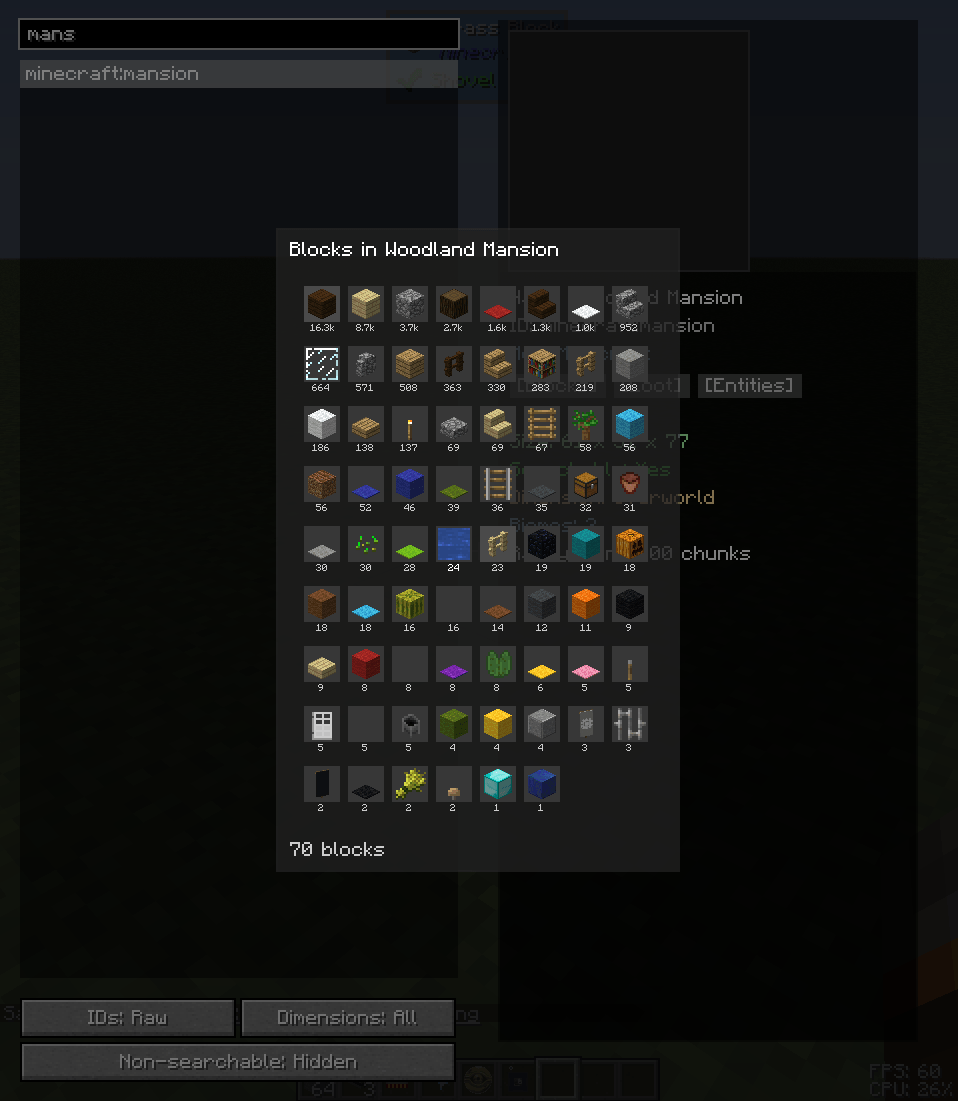
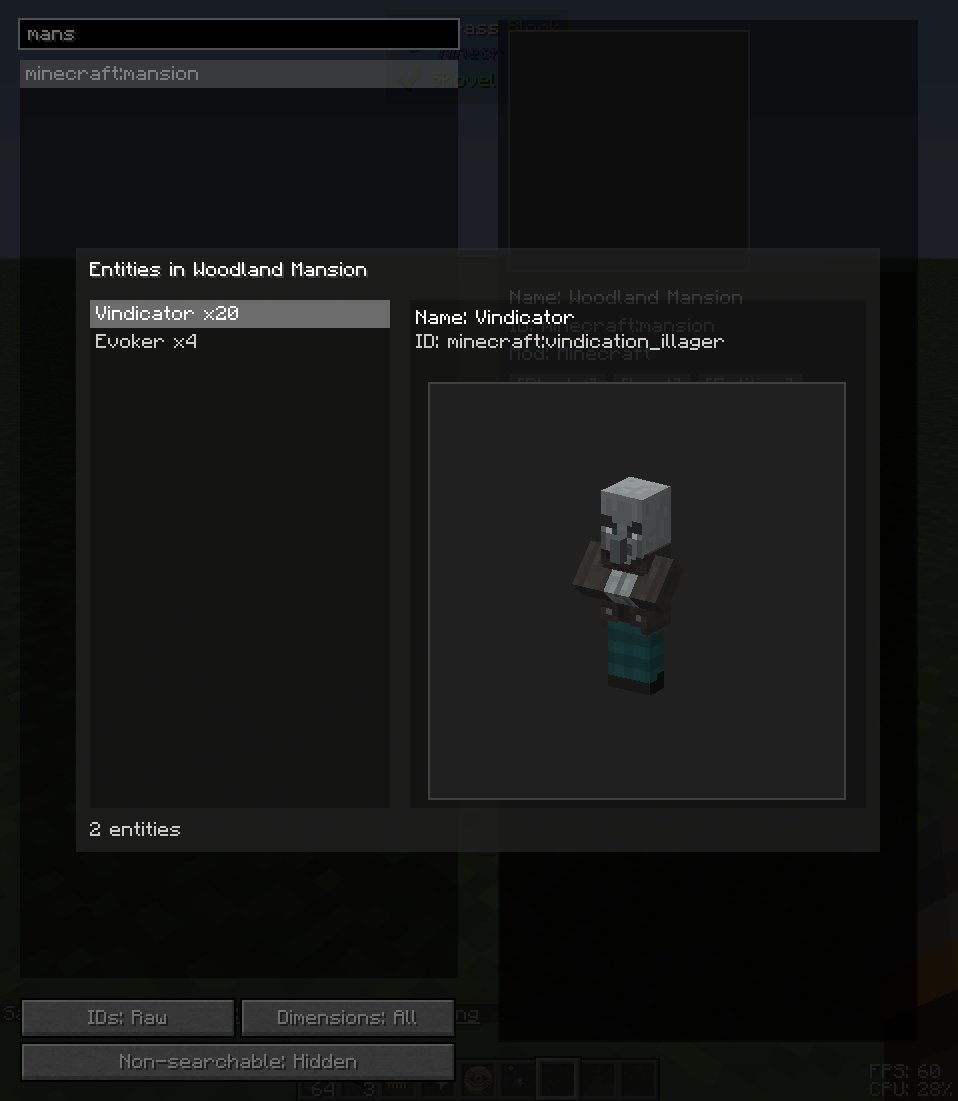
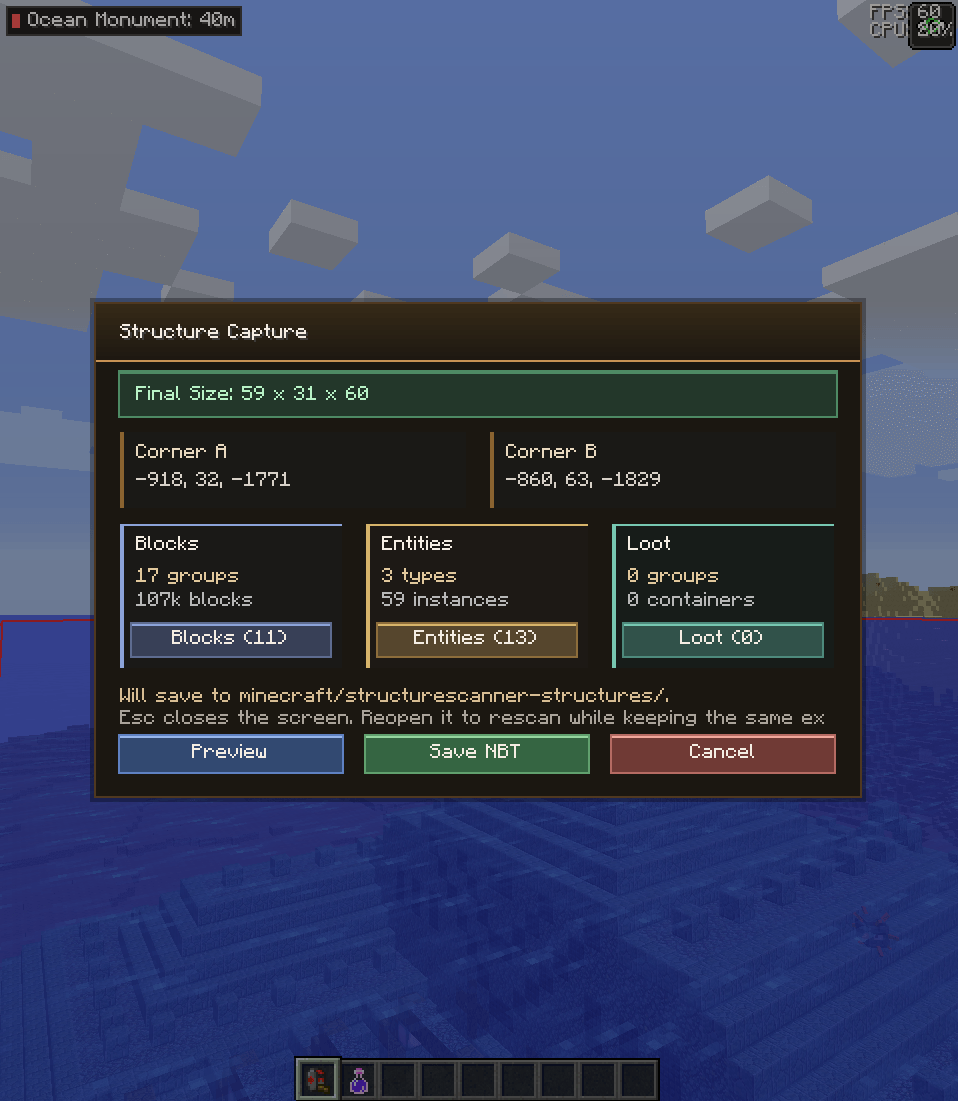
If you wish the query structure locations, you will need to put the mod on the server as well. However, if you only want to view structure information, you can use it client-side, as long as the mods providing said structures are also installed client-side.
The filter box matches both localized and unlocalized structure names. This means you can type the mod name, the name in your selected language, or the default English name. The localization structure is up to the individual providers, but it should generally be gui.structurescanner.structures.<mod_id>.<structure_id>.
Due to how complex the process is, structures from a mod may prevent or overlap with other structures from another mod. In this case, you should try searching for another structure of the same type. Use the arrows in the right panel to cycle through multiple results.
On top of the config blacklist/whitelist (see Config section), there exists a more controlable and fine-grained blacklist system for search and visibility. Visibility is whether the structure will show in the list at all (allowing preview, blocks, entities, loot), while Search is whether the structure will be searchable (arrow pointing to the nearest in-world). It is perfectly reasonable to just use Simple Structure Scanner for the metadata alone, leaving the search disabled. If you want to disable ALL search altogether, I would redirect you to the enableSearch config.
These blacklist are per provider, the id of the provider being matched by file name (see the id of each provider under structure/ or in your own external providers). The blacklists should be placed under minecraft/config/. For example for provider examplepack :
Do note these lists are client-side, because only the search process itself is server-side. Everything else is client-side, meaning any user can modify their own blacklists, if determined enough. However, such user would have have no qualm cheating, in the first place, so this is a best-effort protection.
/sssblacklist can be used to remove entries from these blacklists directly, for example using an item or finishing a quest that allows showing or searching for a specific structure or in a specific dimension.
/sssblacklist hidden handles the vibility blacklist, while /sssblacklist search handles the search blacklist. The provider to pass as argument is the same provider mentioned above, the id that is used for the blacklist file name.
village matches all structures with "village" in their ID or minecraft matches all structures from the Minecraft namespace). To avoid matching too broadly, keep the : separator for namespace matching (e.g., pillar:). Add ;radius to make the entry local, which stops being enforced if the player is within a certain radius of the structure (e.g., minecraft:;100 only blocks vanilla structures until within 100 blocks).minecraft/config/simplestructurescanner/external-providers/. Point each entry to an NBT file (nbtPath) so blocks/layers/entities/loot are automatically parsed from the actual structure NBT data. The .nbt file can be created from in-world structures using the Structure Capture Ruler. It can then be size-optimized using the NBT Tool (see NBT Tools section in the Github repository).