Out on the plains you may come across a nomad camp: a yurt for the leader, small urts for the rest, a campfire with a cauldron hung over it, painted chests holding a working camp's goods, and a post with the herd tied to it. Camps keep well clear of villages — these are not settled folk, and they do not overwinter beside those who are.
A camp is a household, and every member has a place in it:
The caravan's merchant and its authority. He keeps the yurt, deals in the goods of the road, and holds the camp together — deciding when the tents come down and where the caravan walks next.

The ordinary nomads of the household. They keep to the camp while it stands — tending it, sheltering in the tents — and take to the road behind the leader when the caravan moves.

Two armed nomads travel with every camp: an archer with the nomad bow, and a brute with the nomad sword and shield. Both wear the full set of nomad armour.


A household that carries everything it owns still has hands for work. Set the right tool down in a camp and a nomad will take it up as their own — four crafts beyond the leader's own trade, each answering to its own workstation.
Bring one of these blocks to an unemployed villager and you have made a nomad of them, wherever they stand.
A caravan does not stay. It camps for a few days, then at first light the tents come down — packed whole, with everything inside them still in place — the post is pulled from the ground, the yaks are brought in on their leads, and the household walks. They travel until dusk, and wherever they have reached when the light goes, they pitch camp again: each tent finding its own footing on the ground it lands on, the post driven back in, the herd tethered anew.
 The tents are theirs. A camp tent cannot be taken by a player — not broken down, not carried off.
Nomads sleep under two kinds of roof, both raised on a stripped oak frame:

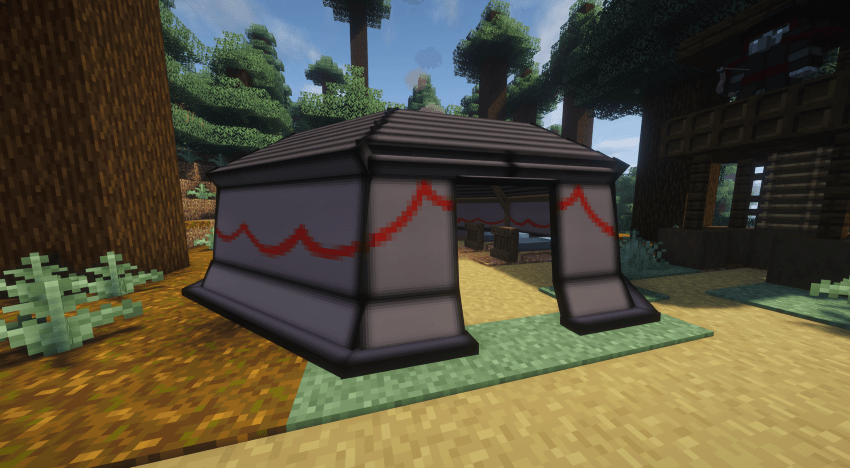

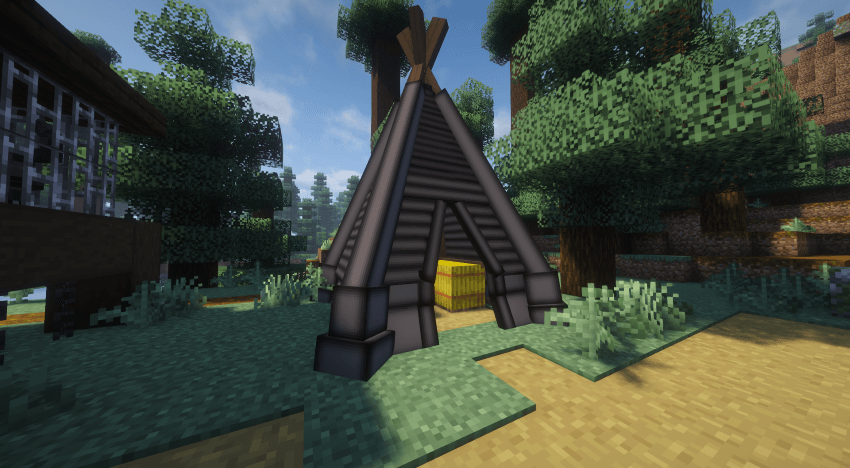 Both are yours to purchase. Set one down and it unrolls into a full shelter you can walk into and furnish. Crouch and take it back and it packs up with its contents intact — the bed you laid, the chest you filled, the decorations you hung all travel with the bundle and reappear exactly as you left them when you pitch it somewhere new. A tent on your back is a home you have not lost.
Smoke finds its way out: leave the ring at the crown of the yurt clear and it will draw properly, the way it should.
A tent with nothing in it is a canvas bag. These are the things a nomad household actually carries — all of them craftable, all of them packed away with the tent when it comes down.
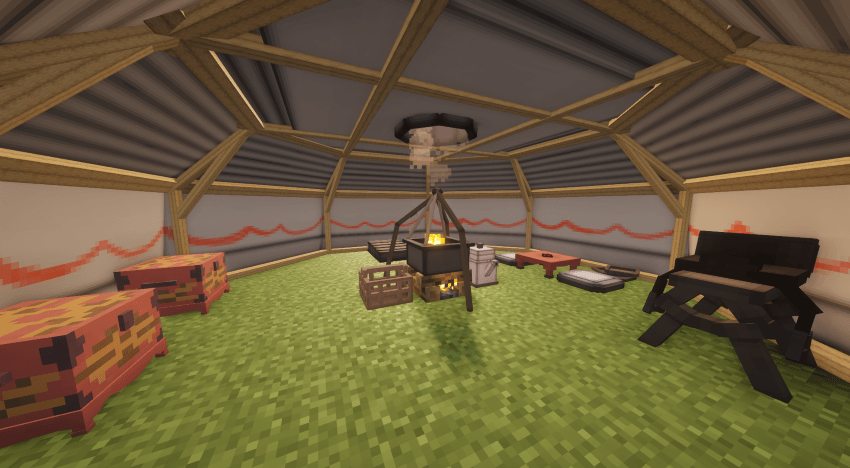
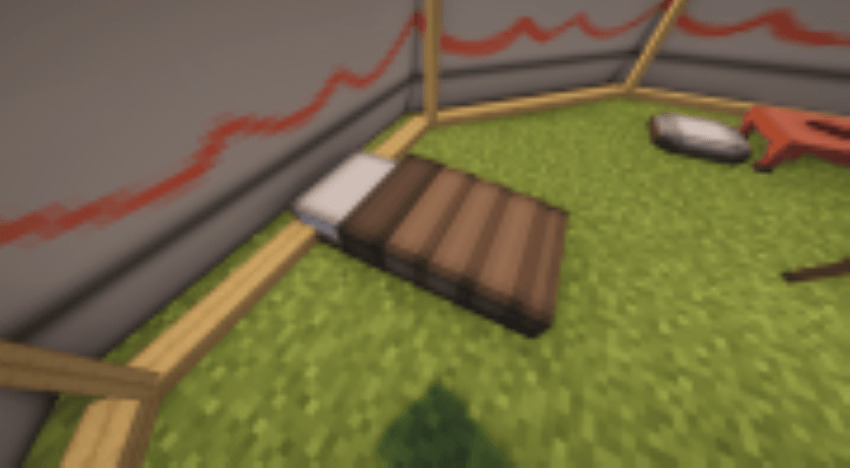
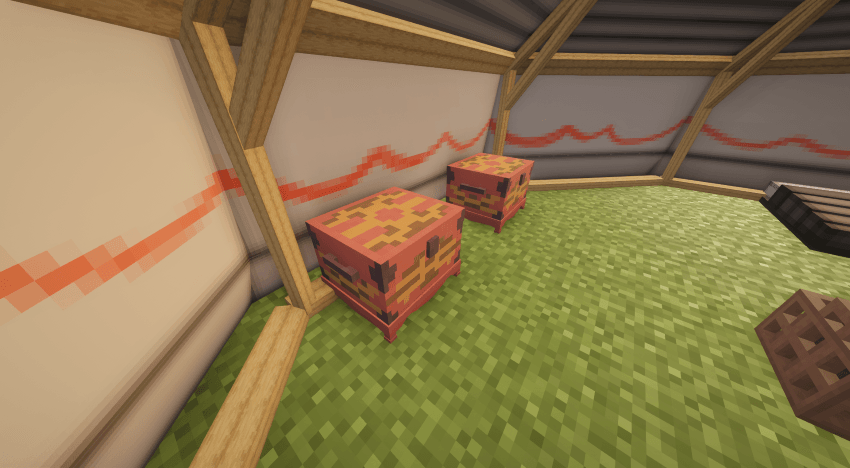
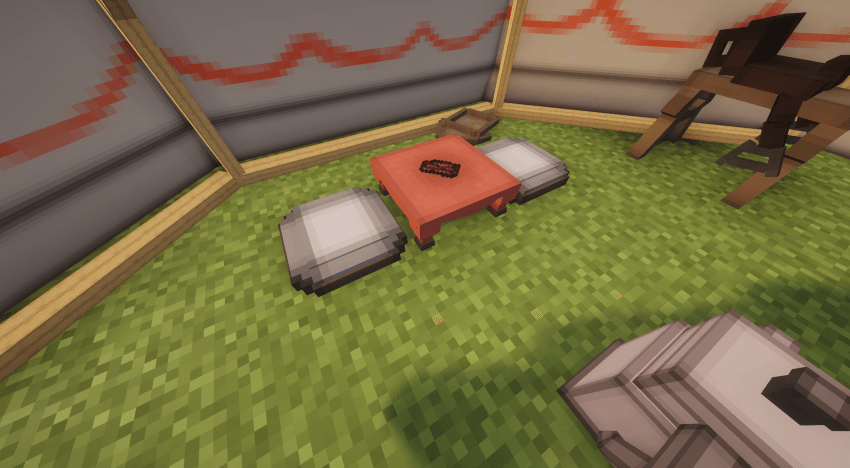
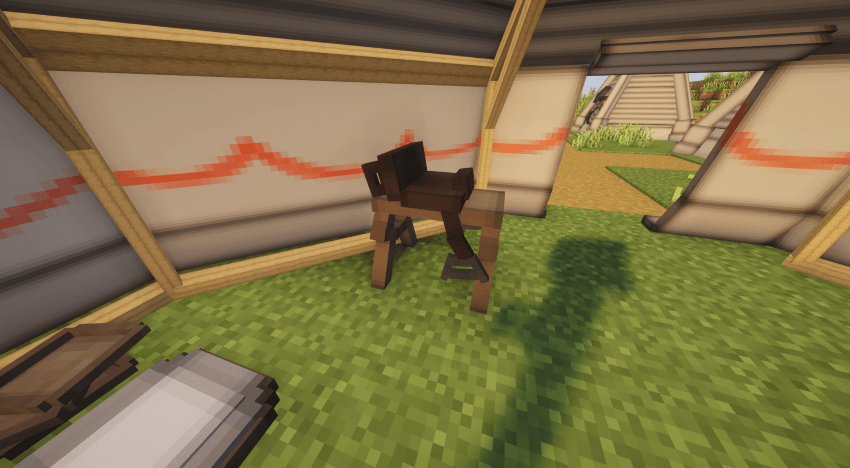
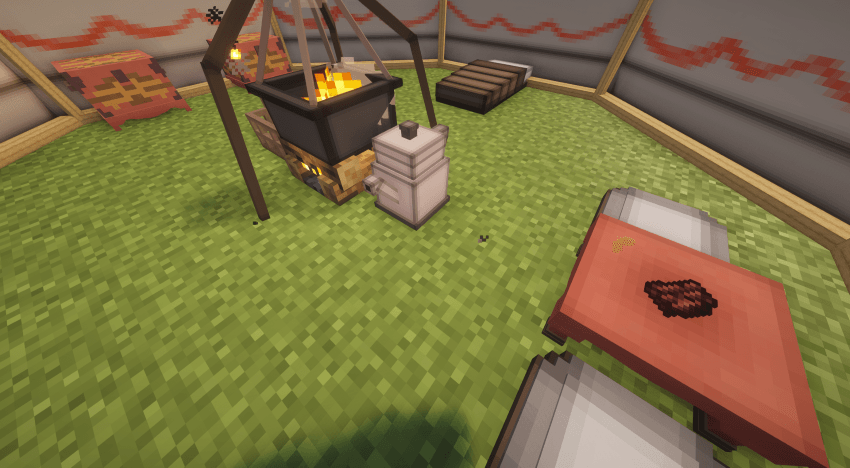
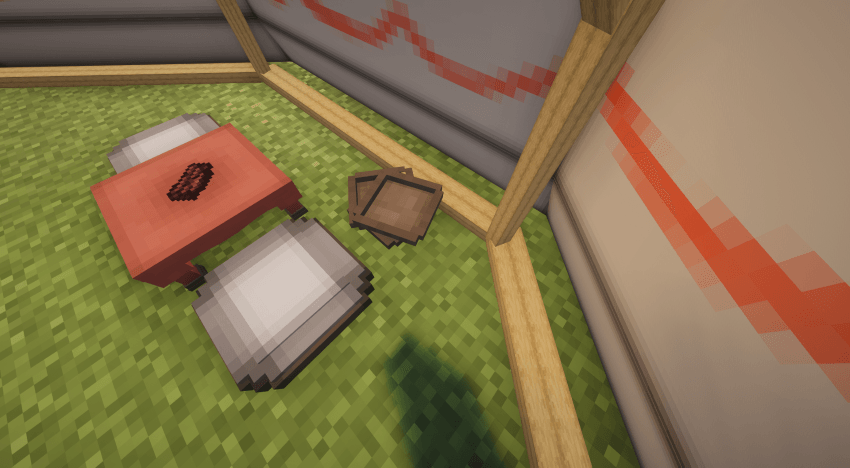
Wool goes in, thread comes out. Right-click a spindle with any wool — vanilla fleece or a yak's own — and it spins four string from it. It is the only way most caravans ever see thread, and it turns a sheared herd into something useful.
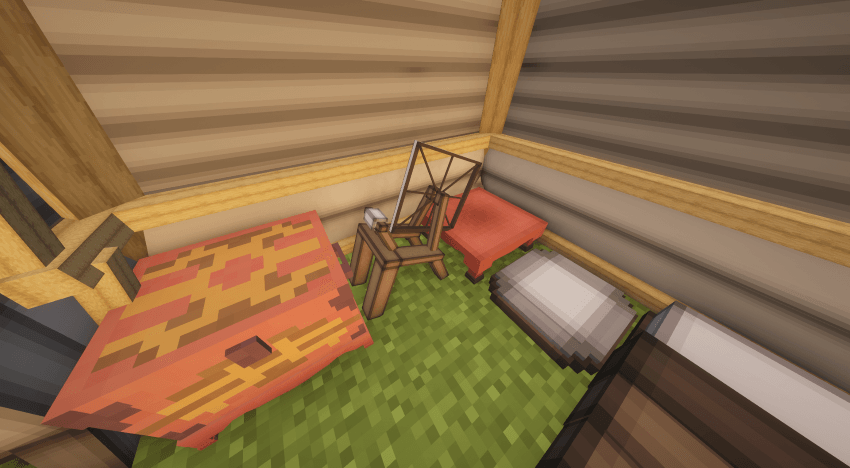
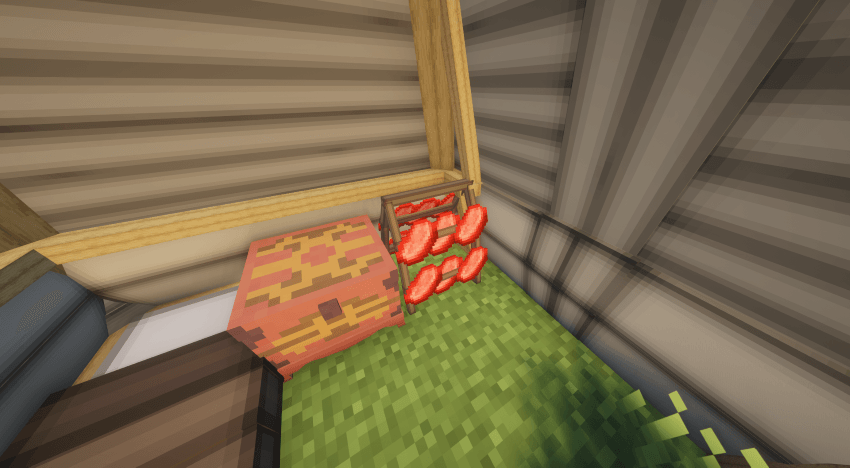
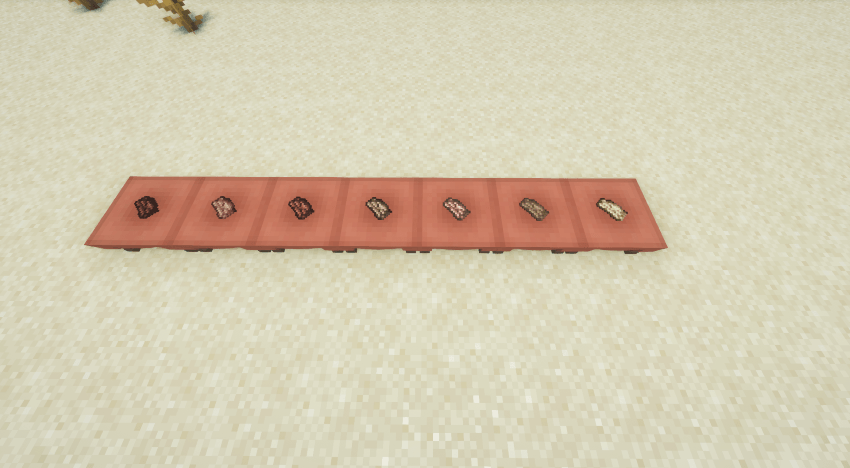
Twelve pieces of meat can hang on a rack at once, and each one takes a full day and night to cure. Hang them as you catch them; they finish on their own schedule, and you can see at a glance which are ready by the colour of what is hanging there.
It will take anything worth preserving — yak, beef, pork, mutton, chicken, rabbit, cod and salmon all come off it as dried meat, food that fills more than cooking ever will and keeps without a fire.
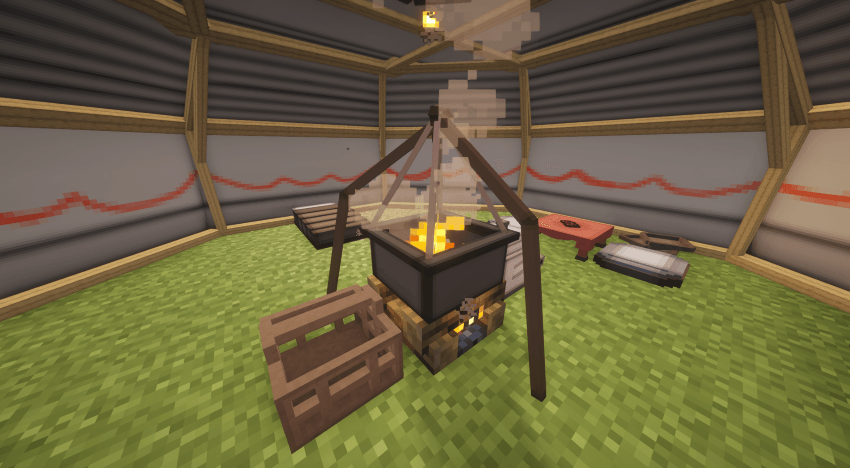
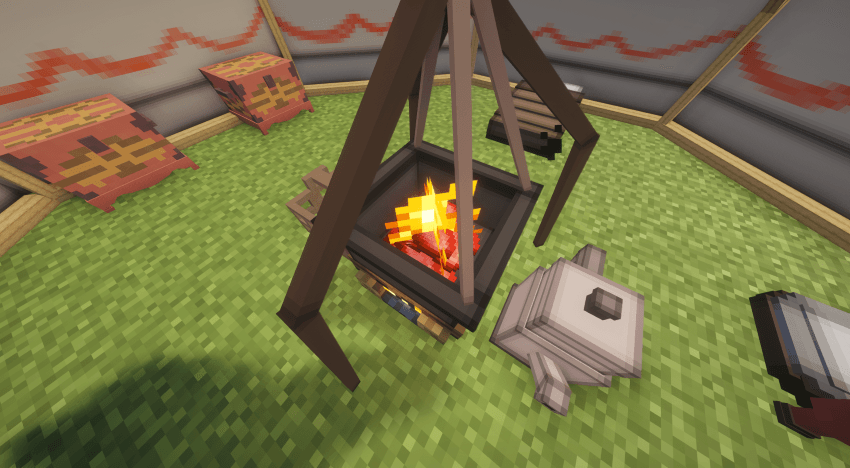
Set it down over a lit campfire and it drops to hang above the flames the way a cooking pot should. Nine things can go in it, one of each, and it cooks anything a campfire would — slower than the fire alone, but you load it once and walk away rather than feeding it four at a time.
Argal — dried dung — is what you burn when there is no wood for a hundred miles, and the herd leaves it behind wherever it grazes. It burns as long as coal.
Feed a basket eight pieces and it presses them into a Block of Argal, which burns longer pressed than loose. There is no other way to make one; the basket is the press.
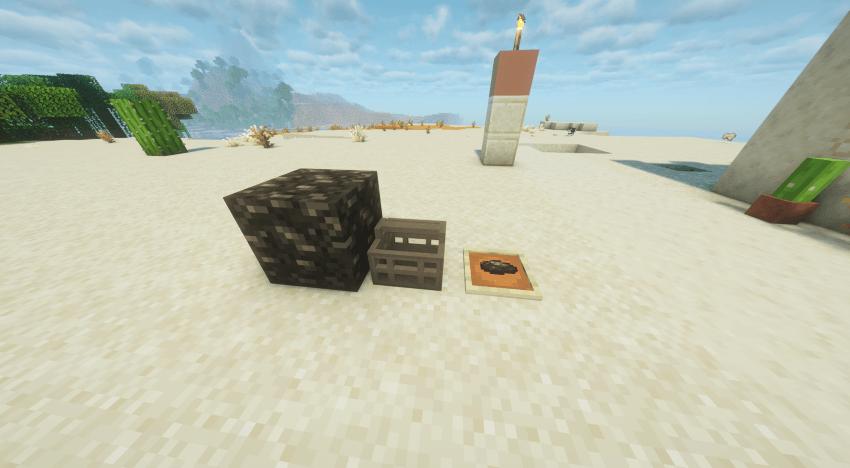
Salt is not decoration. Rub it into raw meat and you have dried meat immediately — the impatient road to what the rack does slowly, paid for in salt rather than in days.
It is also the thing every animal on the steppe wants. Yaks and camels will follow a block of salt the way other beasts follow wheat, and it will tame and breed them just the same.
The animal the caravan is built around. Shaggy, sure-footed, and content on ground that would starve other herds.
The domesticated stock — the Brown yak that caravans have and the White yak that can appear with a wandering trader


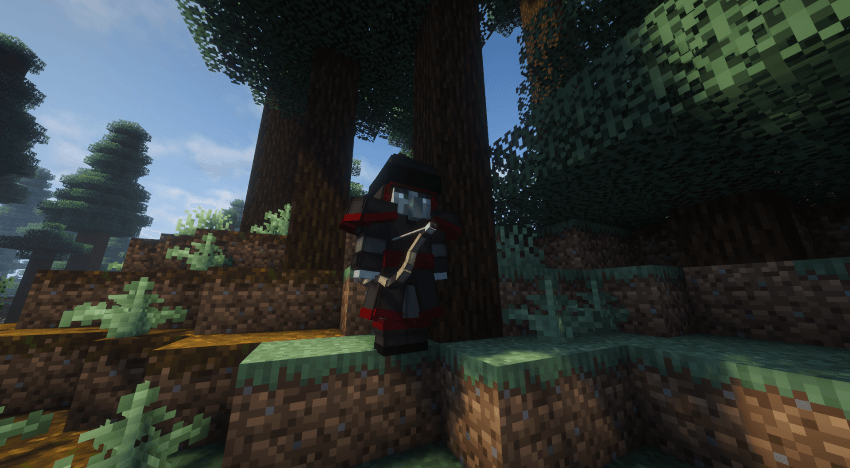
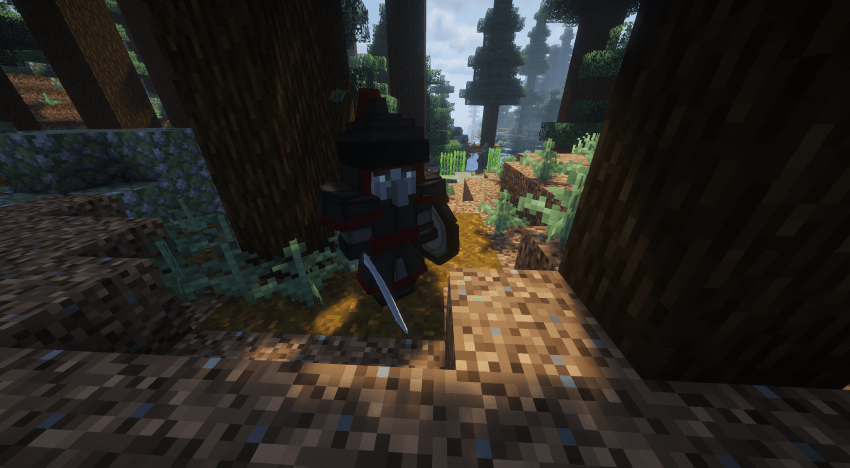 Sometimes you may come across a Gray Yak captured by Bandits. Rescue it and it shall be yours.

These are untameable stock: no hay bale will win them, no saddle will sit on them, and they carry nothing for anyone. They can still be sheared and they will still breed, but they answer to no one.
They are found as a mixed herd — a Gray yak at its head, with a few others and sometimes a calf at foot. And the Gray yak at the head of it is not a gentle animal. Provoke one and it will lower its horns, paw the ground, and charge, hitting harder than you expect and faster than you can outrun. Strike one and the whole herd remembers you for a good while afterwards.
 There is one way to bring wild blood into your care: raise it yourself. A calf born of two wild parents, brought up by your hand, grows into a tame animal of its parents' breed — the only path from the mountain herds to a yak that will carry your chest.


Where the grass gives out and the sand begins, the yak has no business — and the two-humped Bactrian camel does. It carries what a yak carries and asks less of the ground it walks on.
*
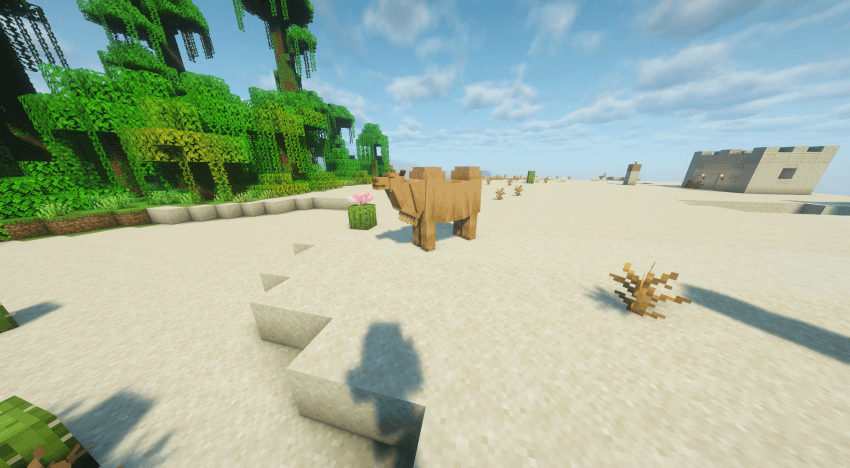 Everything you can do with a yak you can do with a camel: tame it, saddle it, ride it, load it with a chest, throw a coloured carpet over its humps. It grazes like they do, and leaves the same argal behind.
You will not find one wandering the dunes on its own. The bactrian is a throwback: about one camel calf in ten grows up with the second hump, and the camels of the desert villages are where that blood runs. Watch a village herd long enough and one will turn up.
And where a caravan crosses the sand, it crosses it on camels — a household on the move through desert, badlands or savanna will have camels at its back instead of yaks.
The plains are not empty, and the caravan is not the only thing moving on them.
Every so often, out under open sky, you will find a caravan already on the march — a leader with a yurt on his back, followers carrying the small tents, guards to either side, and the herd walking behind. They are going somewhere. Follow them to nightfall and you will watch them make camp from nothing.
Others have noticed that a caravan carries everything it owns. Bandits come for them — not for you, though they will not mind — and when they do, the guards earn their keep.
Both of these are rare, and both only happen under open sky. Both can be switched off in the config if you would rather the plains stayed quiet.
Somebody has to be the reason the guards exist.
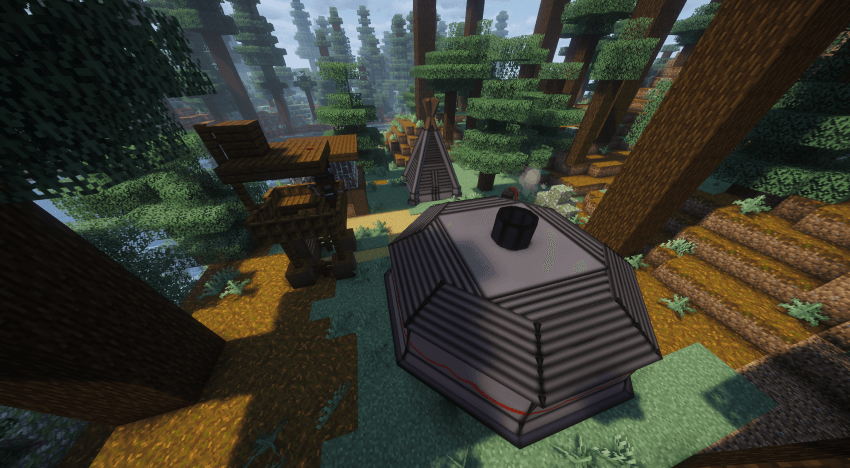
Bandits keep to their own camps — a ring of dark tents around a cage, and often a stolen yak inside it. They wear their own blackened cut of nomad armour and carry the same weapons the guards do.
All of these are craftable and purchasable
Every piece takes an enchantment the way its vanilla counterpart would, and the bow wears down with use like any other.
 The white and gray yaks carry lit lanterns through the dark. If you run a dynamic lighting mod, they will cast real light as they walk — that is the intended sight, and Nomad Caravans stays out of its way. For anyone playing without one, there is an option to switch on a simpler light that follows the yak instead. It is off by default but can be toggled in the config.
A handful of knobs, in nomadcaravans.properties:
lanternLightBlocks — the fallback lantern light described above. Off by default.wanderingCaravans — caravans met on the road. On by default.banditRaids — bandits attacking caravans. On by default.bactrianGrowthChance — how often a camel calf grows up two-humped. 0.10 by default.