Living World Memory is a data-driven Minecraft Forge mod that makes the world remember what happens inside it. Instead of treating every chunk as static terrain, the mod records long-term activity and gradually transforms the environment based on what players, mobs, villages, weather, combat, construction, mining, farming, and nature have experienced.
Built for Minecraft 1.20.1 with Forge 47+, the mod creates persistent chunk-level memories that decay naturally over time. A frequently traveled area can develop a road, an intensely mined mountain can retain its mining history, a battlefield can become scarred, and an abandoned settlement can slowly return to nature.
Each tracked chunk stores multiple independent memory statistics, including:
These values are not permanent counters. Different memories have different decay behavior, allowing old events to gradually fade while repeated activity keeps memories strong.
The stored memories drive several evolution systems.
Repeated player movement and high footstep activity can cause frequently traveled routes to become recognizable paths. Long-term traffic creates a visual history of where players regularly travel.
Forests respond to repeated tree cutting and environmental activity. Heavy logging can create visibly altered areas, while unused forests can gradually recover.
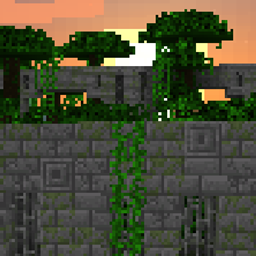
Abandoned locations can slowly become reclaimed by nature. Vegetation and environmental decorations can appear as an area remains unused.
Villages remember player interaction and activity. Helpful long-term interaction can improve a location's remembered reputation, while destructive or hostile behavior can create negative memories.
Heavy combat, deaths, explosions, and other intense events can create battlefield-style environmental memories. Areas where major conflicts occurred can remain recognizable long after the fighting has ended.
Mining and repeated activity around mountains can influence their remembered state. Deeply worked areas can become notable locations within the world's history.
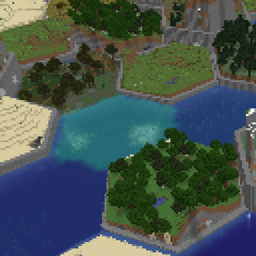
Water-related activity contributes to river and environmental memory, allowing areas to retain a history of interaction with water.
Rain and snow activity is tracked independently, allowing environmental history to influence remembered conditions and related effects.
When an area stops receiving meaningful activity, abandonment memory increases. Long-abandoned locations can eventually transition toward nature recovery and ruin-like states.
Certain remembered locations can receive atmospheric effects that help communicate their history without requiring the player to inspect statistics manually.
The evolution system is designed around registries and external data files rather than hard-coded behavior alone.
Evolution thresholds are supplied through data resources for:
Decoration definitions are also data-driven, including examples such as:
This architecture allows the evolution system to be expanded without redesigning the entire memory engine.
The mod includes a player reputation system connected to remembered world activity.
A player can become:
This creates a persistent relationship between players and the places they interact with.
The mod includes tools for inspecting chunk memories and understanding how the evolution system is behaving.
Inspect the current chunk
/worldmemory inspect
Shows the memory information for the chunk where the player is currently located.
Inspect a specific chunk
/worldmemory chunkinfo <x> <z>
Displays stored memory information for the specified chunk coordinates.
Reset the current chunk
/worldmemory reset
Clears the remembered history of the player's current chunk.
Reload configuration
/worldmemory reload
Requests a configuration reload.
Export world memory
/worldmemory export
Exports the mod's stored memory data to:
livingworldmemory_export.json
Import world memory
/worldmemory import
Imports previously exported Living World Memory data.
Run a performance benchmark
/worldmemory benchmark
Benchmarks memory/evolution processing and reports timing information.
Benchmark a specific number of chunks
/worldmemory benchmark <chunkCount>
The supported benchmark range is 1–20,000 chunks.
Enable live debug HUD streaming
/worldmemory debug on
Disable live debug HUD streaming
/worldmemory debug off
The live debug system can automatically update as the player moves between chunks.
Find notable locations nearby
/worldmemory nearby
Search nearby locations using a custom radius
/worldmemory nearby <radius>
The command supports a radius of 1–64 chunks.
Check the player's local reputation
/worldmemory reputation
The nearby-location system can identify memorable areas such as:
This turns the world into a discoverable historical map where important places emerge naturally from gameplay.
For development, testing, server administration, and modpack configuration, Living World Memory provides a live debugging system.
The HUD can stream chunk-memory information to the client as the player travels between chunks. A separate client configuration controls whether the visual debug overlay is displayed.
The mod provides separate common, server, and client configuration controls.
Individual evolution systems can be enabled or disabled:
Server administrators can configure:
This allows server owners to balance the mod for small worlds, large survival servers, modpacks, or performance-sensitive environments.
Client-side settings include:
Living World Memory includes custom advancements that encourage players to interact with the evolving world.
Examples include:
The mod includes a dedicated Living World Memory API, memory capability handling, compatibility management, registries, event integration, networking, and data-driven reload listeners.
This architecture is intended to allow other systems and future content to interact with world-memory data without directly depending on the internal implementation of every memory subsystem.
World memories are stored at the chunk level and processed through a scheduled evolution system. Processing is budgeted so that large numbers of remembered chunks do not need to be fully evaluated every game tick.
The benchmark command provides administrators and developers with performance information, including processing time per chunk and estimated workload based on the configured chunk budget.
Living World Memory transforms Minecraft from a world that simply changes because blocks were placed or destroyed into a world that remembers why an area became the way it is.
A road exists because people repeatedly traveled there. A forest is scarred because it was heavily logged. A battlefield remains notable because major conflicts occurred there. A village remembers how players treated it. An abandoned settlement slowly disappears beneath nature. A mountain remembers where generations of miners worked.
Your actions become history. Your history becomes the world's memory.