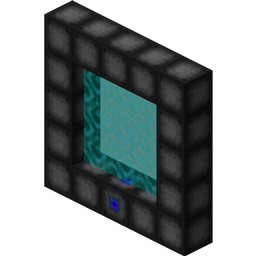
Dimension Tech is a technology mod. Its automation loop is built around the value of generated structures: analyse a structure into a marker, then let a Mythic Miner produce resources from that structure's loot expectations.
License: GPL-3.0
V to analyse and mark the container under the crosshair.min(10, parallel) of each).Structure analysis reads a structure's loot tables and calculates expected item counts and structure value. Analysis can complete asynchronously; a marker is not advanced into a processing job until its result is ready.
Miner output uses expectation-preserving reward generation from analysed item expectations. It preserves long-run expectations, but does not replay Vanilla LootTable joint distributions, pool selection, function chains, or random sequences.
Mythic Miners are available from Tier 1 through Tier 6. Each tier differs in marker slot count, base parallelism, luck, efficiency, and energy specifications (Tier 1 has a single marker slot, Tier 6 has nine), and each slot advances independently. The server's common configuration controls the actual values.
The base multiblock requires:
The whole machine hangs below the miner itself (the miner owns the top layer): clear a 5x5x5 space underneath it first. The projection marks every position. The glass replaces the focus blocks the old layout needed, running through the waist so the casing sides stay see-through.
Every tier requires a fluid input by default (the gate is BaseMinerBlockEntity#requiresFluidInput, which defaults to tier >= 1; KubeJS can turn it off through requiresFluid(false)). The required fluids are:
| Tier | Required fluid |
|---|---|
| 1 | Water |
| 2 | Mythic Essence |
| 3 | Surging Mythic Essence |
| 4 | Recursive Essence |
| 5 | Surging Recursive Essence |
| 6 | Fractal Essence |
Fluid is charged when a processing cycle starts; energy is charged once per natural game tick. Every processing cycle is at least 400 natural ticks long. This preserves predictable resource accounting when an external system accelerates block-entity ticks.
On top of the structure loot, every processing cycle yields three extra things: min(10, parallel) dimension fragments and the same number of mining tokens, both of the miner's own tier, plus dimension deconstruction cores rolled parallel times at min(1, 5% x tier) each and capped at 10 per cycle (the expected-item toggle can turn them off). Fragments and tokens are the ingredients of the Data Integrator and the Structure Interpreter, so those two parts can only come after the miner.
The Structure Reactor is a single-block machine and the main line for structure-related crafting (such as producing dimension fragments and other dimension products). It has two 16,000 mB essence tanks, a fragment slot, and an immediate operation slot, advancing recipes through a finite-state cycle. Starting and committing a cycle validates input fluid, fragments, recipe matching, and output capacity, and it can emit a redstone analog signal.
The default recipes escalate the essence chain one step at a time: water to Mythic Essence to Surging Mythic Essence to Recursive Essence to Surging Recursive Essence to Fractal Essence, each step consuming the dimension fragment of the matching tier. KubeJS can override the recipes; see the in-game GUI, JEI, and the KubeJS documentation for concrete values and telemetry.
The machine needs two prerequisite parts, and both recipes consume miner output: the Data Integrator takes tier 2 dimension fragments and mining tokens (plus quartz, amethyst shards, a casing, and redstone), while the Structure Interpreter takes tier 5 fragments and tokens plus a nether star and netherite, and one Data Integrator in its own recipe. That is why the operator sits after the miner.
The operator cannot browse structures on its own: the catalogue needs a Data Integrator in the integrator slot first, and then a Structure Interpreter in the interpreter slot — that slot only accepts the interpreter while the integrator is in place, and the integrator cannot be pulled out while the interpreter sits there. With both installed the catalogue appears, so you can browse and analyse structures and write an entry into the Structure Marker held in the target slot.
The Chest Marker handles loose containers: hold it and press the analyse key (default V) to run an expectation analysis on the container under the crosshair — if that container references a loot table, that table becomes the source and the container gets marked. The action is key-bound rather than right-click, because right-clicking a chest opens it first; right-clicking the Chest Marker only opens the analysis screen for the marked contents (chest value and calculation method).
The Chest Marker and the Structure Marker share the same marker NBT (StructureMarkerData; a chest adds a nested ChestData tag holding the loot table and seed). Downstream only reads the NBT structure and never the item type, so the operator's copy mode and the miner's production chain consume both. The only difference is the analysis profile: a chest registers no structure, so its profile uses the recorded loot table alone and never touches structure templates or level loading.
Server configuration or KubeJS can change the value rules for structures, dimensions, and items. A rule change invalidates relevant analysis caches and causes recalculation on the next use.
The Forge common configuration contains base values for all six miner tiers as well as structure values, rarity multipliers, dimension values, item rules, and analysis strategy. Forge creates the configuration file in the instance's config directory.
These integrations are optional:
See docs/kubejs.md for the complete KubeJS API, events, and validation rules. processingTime must be at least 400; smaller values are rejected explicitly.