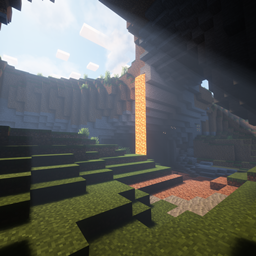
Bring the Earth into Minecraft with real-world terrain, biome-driven landcover, and configurable world scale.
Terrarium Expanded includes integrations for:
Requirements
- Minecraft
1.21.1- Java
21+- A live internet connection during world generation and exploration
Terrarium Expanded fetches three live remote data sources:
- Terrain tiles
- Surface-water tiles
- Ecoregion tiles
If those services are unavailable or blocked, world generation quality and completeness will degrade.
Terrarium Expanded generates an Earth-shaped overworld from real map data instead of vanilla noise alone.
You can also choose different zoom levels, which change the playable world's total size and the approximate real-world distance represented by each block.
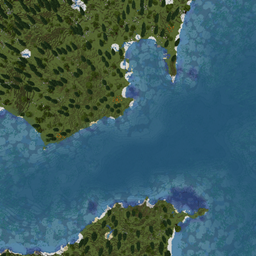
Primary gallery below uses the vanilla biome integration at z=10.
/1. San Francisco.png)
/3. Mt. Fuji.png)
/7. Straight of Gibraltar.png)
/8. Montreal.png)
/9. Grand Canyon.png)
More screenshots and alternate biome-integration galleries are indexed in documentation/readme.md.
Higher zoom means a much larger playable world with finer real-world detail, but also heavier generation cost and more remote tile fetches.
| Zoom | World Size (blocks) | Approx. Scale | Guidance |
|---|---|---|---|
8 |
65,536 x 65,536 |
~611.50 m/block |
Broad regional scale, fastest option |
9 |
131,072 x 131,072 |
~305.75 m/block |
Large world, lighter runtime cost |
10 |
262,144 x 262,144 |
~152.87 m/block |
Good default balance for exploration |
11 |
524,288 x 524,288 |
~76.44 m/block |
Finer terrain detail, heavier generation |
12 |
1,048,576 x 1,048,576 |
~38.22 m/block |
Maximum scale and detail, slowest uncached exploration |
1.21.121+The mod depends on live requests for:
These datasets are configurable in the Earth preset editor, but the default experience assumes the public tile services are reachable.
Performance can be poor when the game has to generate many chunks quickly or enter uncached regions for the first time.
As the world generates, downloaded terrain, surface-water, and ecoregion files are written into a local cache. You can delete this cache at any time without breaking the world, but future generation will be slower until the files are downloaded again.
Once tiles are cached locally, revisiting the same regions should be smoother.
Terrarium Expanded currently uses:
Default remote endpoints are currently configured as:
https://elevation-tiles-prod.s3.amazonaws.com/terrariumhttps://d127t6piqu53ls.cloudfront.net/tiles-reducedhttps://storage.googleapis.com/global-surface-water/tiles2021/seasonalityFor implementation details, see documentation/WORLDGEN.md.
Build from the repo root with:
.\gradlew buildThe project targets Architectury with both Fabric and NeoForge enabled.