A village-centered item-trading experience for Minecraft.
Rural Routes is a village-centered item trading mod. It adds independent trading posts, display cases, rumor boards, and a trade atlas to villages, so each village can develop a distinct trade identity. It is not a replacement for vanilla villager trading; it is a separate trading system built around villages.
If you like village variety, item exchange, and lightweight economy systems, this mod gives each village its own trade value.
The mod is still in testing, so content and gameplay details may continue to change. If you have suggestions about the design or direction, feel free to open an issue on GitHub.
In vanilla Minecraft, resources usually come from a fixed base, farms, mining, and waiting. Rural Routes offers a different rhythm:
The mod's focus is to turn trade differences between villages into a system that can be used long term.
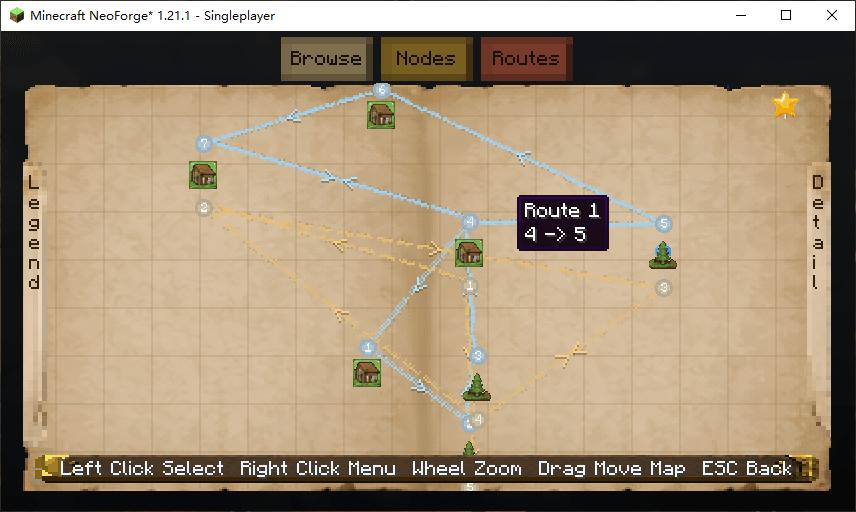
The trade atlas is the core entry point of the mod. You can use it to:
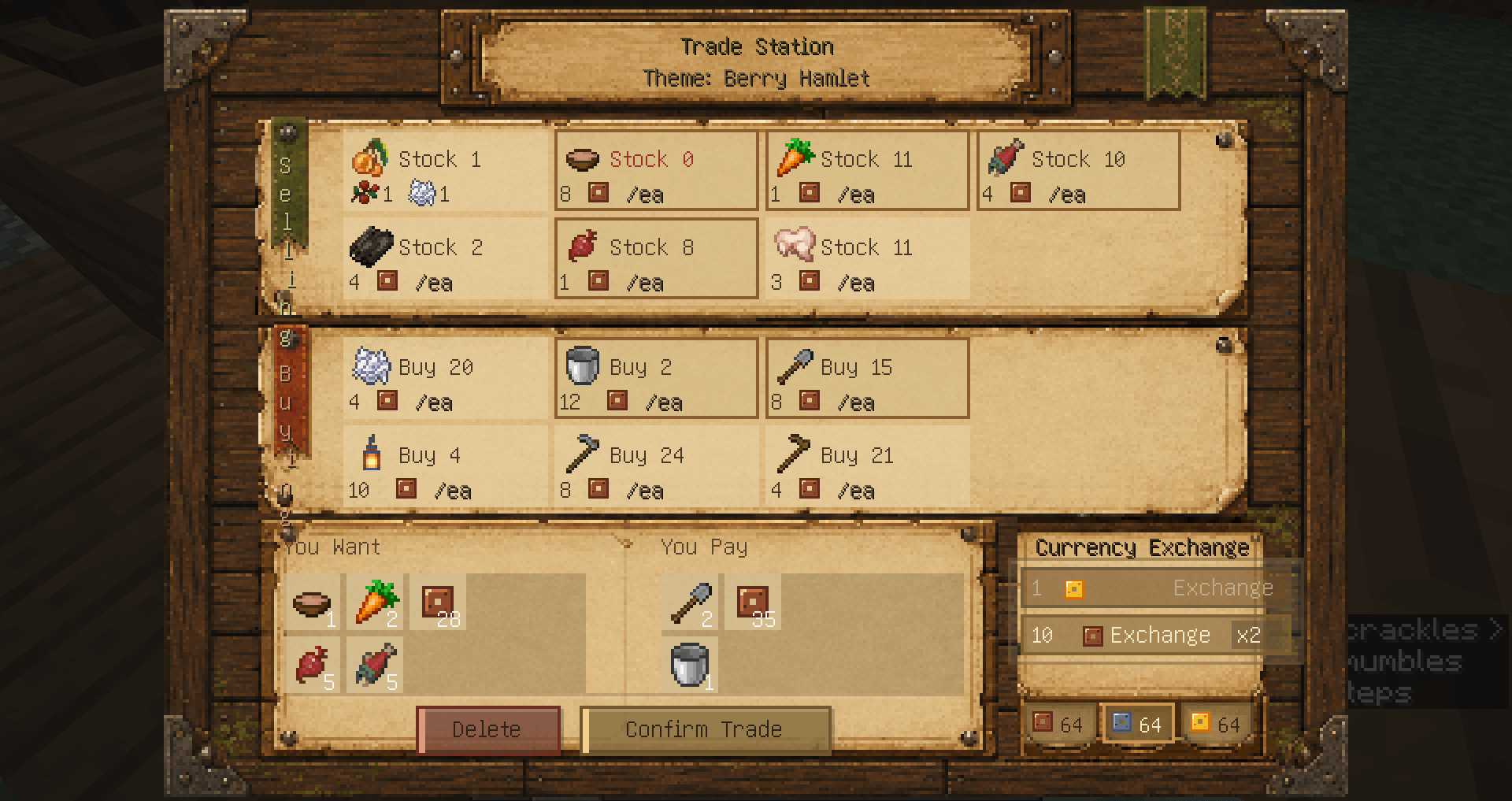
The trading post is the main interaction point of the mod. Each activated village trading post has its own stock, buy direction, and trade cycle state.
You can use it to:
Villages in different biomes favor different kinds of goods and trade patterns. The current version includes 15 themed villages:
Each theme has a unique trade identity, sale catalog, and purchase demands. You decide whether to trade based on where you are and what you currently need.
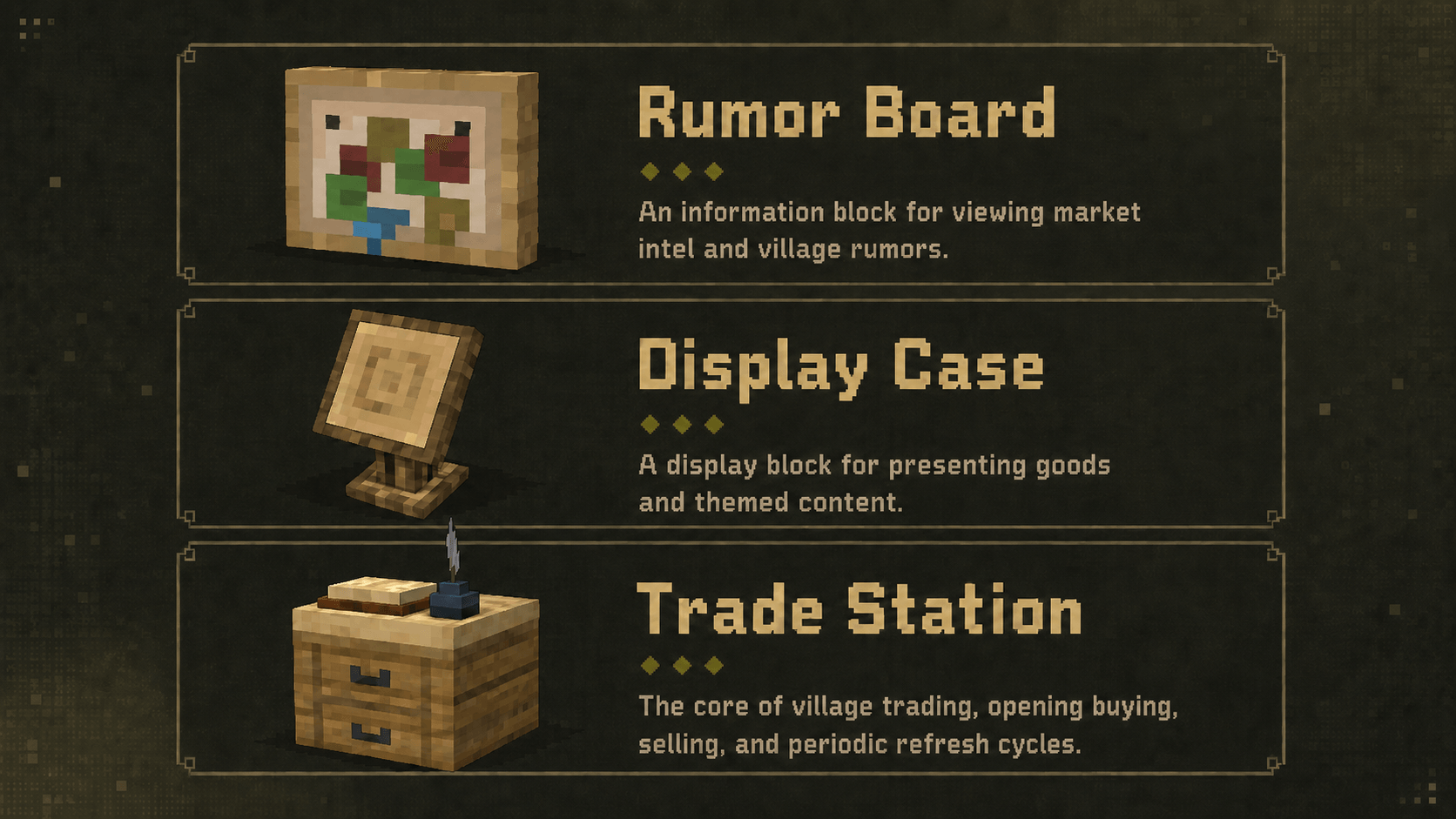
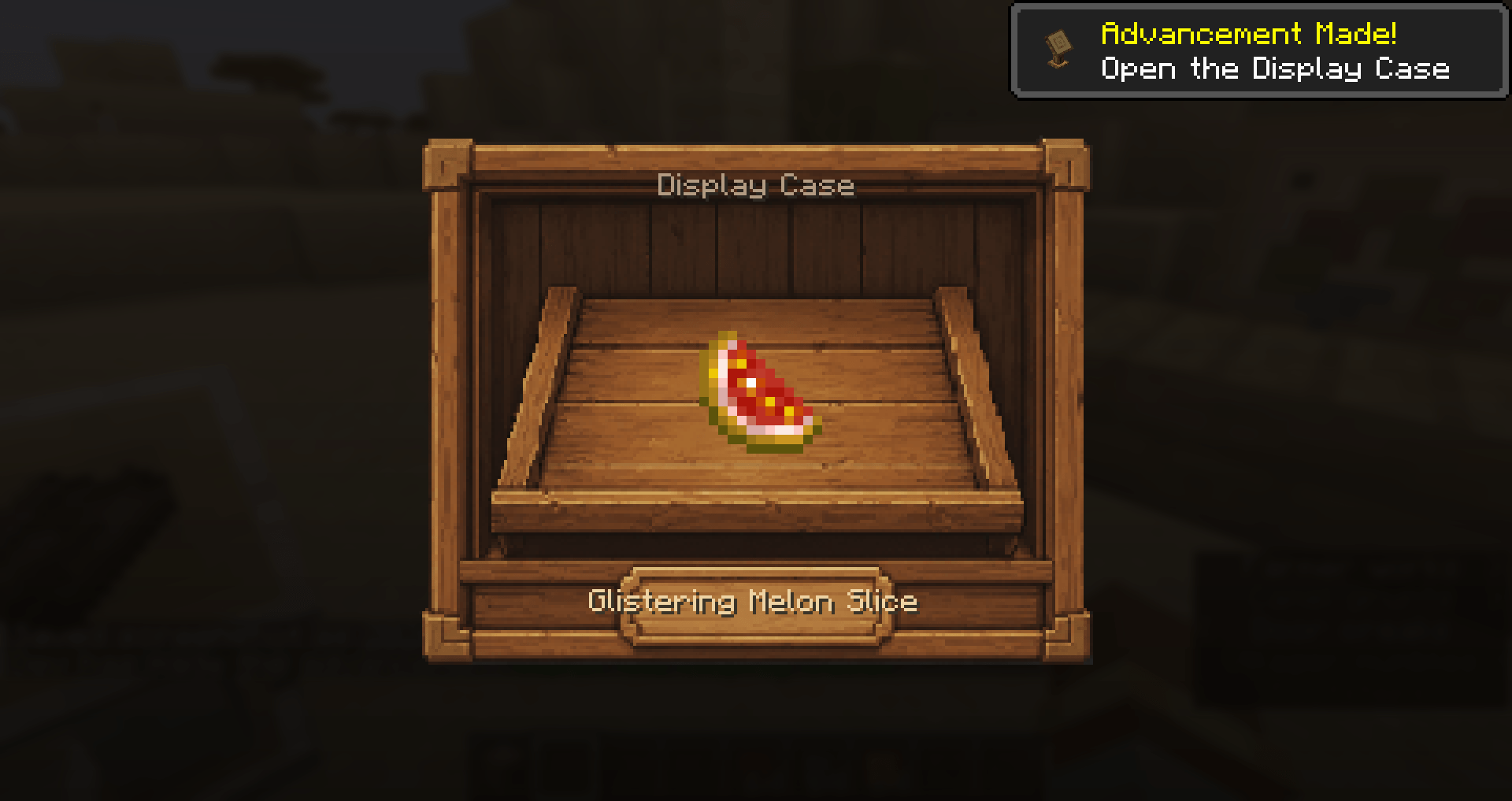
The display case lets you quickly see a village's representative sale items.
Before opening the full trading UI, it helps you judge whether the village is worth stopping at, or whether it is better used as a supply point later on your route.
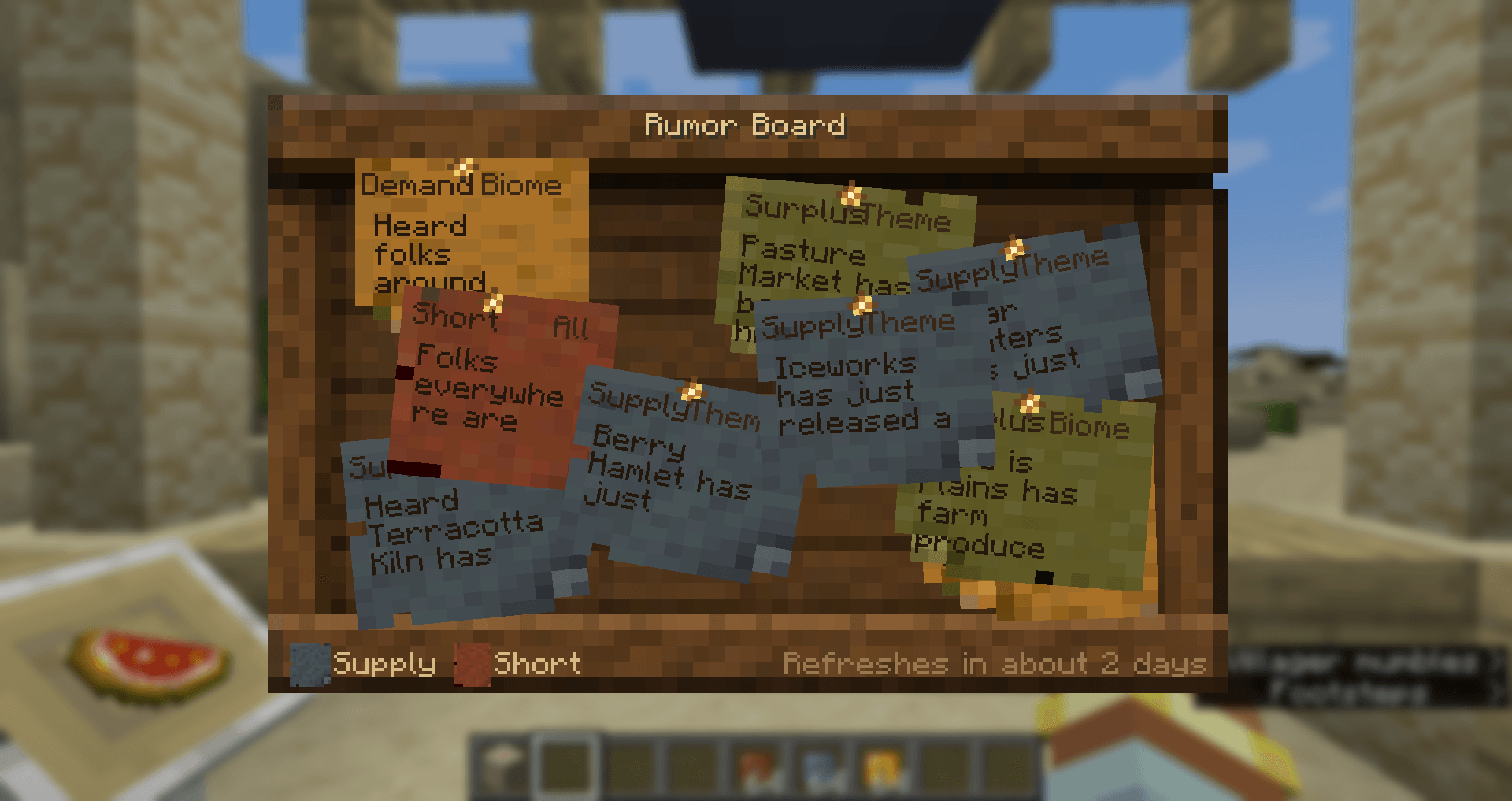
The rumor board generates vague market intelligence based on the current market state.
It does not give you exact numbers. Instead, it hints in a more natural way which goods are in short supply, where more supply may exist, and which themes or regions are changing. The goal of the rumor board is not to make decisions for you, but to give your journey a sense of direction.
Each trade cycle generates new market events that affect the price and stock of some items.
These changes may be global, or they may affect only certain biomes or village themes. They make different villages more or less valuable at different times, encouraging players to observe, remember, and move rather than staying in one place and trading forever.
Most of the mod can be configured through datapacks, so you can customize almost everything. See the Datapack Creation guide for details.
Rural Routes may fit you well if:
If you only want a shop mod that quickly hands out every resource, Rural Routes is probably not that direction. It is more focused on villages, trade, and market changes.
Craft a trade atlas, or find these blocks in villages:
| Block/Item | Function |
|---|---|
| Trade Atlas | Locate villages, draw trade routes, plan paths |
| Trading Post | Opens the main trade interface |
| Display Case | Shows representative sale items for the village |
| Rumor Board | Shows market rumors for the current cycle |
For a first play session, it is a good idea to do these things:
After your first trade, the mod's rhythm will unfold naturally. You will start thinking about what is worth carrying, which villages are worth revisiting, and where to go next.
Does this mod replace vanilla villager trading?
No. Rural Routes uses an independent trading post system and does not replace vanilla villager trading.
Do I need this system to survive normally?
No. It provides an additional resource route that you can use as needed.
What kind of experience is this mod aiming for?
It is more about item exchange between villages and market changes than about being a simple villager shop.
Why do some villages not have enough stock?
That is one of the mod's core constraints. Limited stock encourages natural movement instead of staying in one place forever.
Why doesn't the rumor board show exact numbers?
The rumor board is meant to give direction, not calculate for you. It helps you judge where it may be worth going, but the route is still your choice.
If you run into problems, or if you have suggestions about the content and gameplay, feel free to report them on GitHub Issues:
https://github.com/MCZME/ruralroutes/issues
This project is released under the MIT license.